
Ooma Telo fails to connect
Ooma Telo fails to connect

So I've recently tried to purchase the Ooma VoIP adapter to add as home phone to my network.
I initially had problems out of the gate. I was able to finally get the Telo device to register correctly by directly connecting it to my ISPs ONT. However if I connect it on my network it fails to establish a connection.
I was originally in standalone mode and went to a software controller and adopted as I was seeing that there was more granular control from the Omada panel. However everything I've tried has failed .
I've tried the following:
The ISP and ONT pass the traffic perfectly when directly connected.
The MTU is a clean 1500.
Every anomaly, flood, and SPI firewall defense is disabled.
Hardware offloading is off.
The ports are hard-forwarded, and the native LAN DMZ still fails.
VPN Passthrough (IPsec/PPTP/L2TP) is enabled.
Contacting Ooma support basically told me that they're seeing intermittent connection but they're failing to see the VPN via OpenVPN be actually established properly. My latest research is showing that it could be the NAT rules and the suggestion from AI was to enable full-cone NAT which there doesn't appear to be an option to do so. And there is no way to directly edit the firewall rules.
I tried using the device as the initial router but even at that connecting it to the WAN port of my ER 605 failed to actually allow it to get to the internet. Although this would have been solely a test as my reason for having the 605 is to have multi-WAN functionality.
- Copy Link
- Subscribe
- Bookmark
- Report Inappropriate Content

Hi, @Jeffjones72
Thank you for posting your query on our business forum.
Could you kindly confirm the following information with us:
Have you configured the VoIP function? Additionally, have you set up OUI-based VLAN on your switch to add your ip phone to your network?
You may refer to the relevant post here for reference:Where is the “Add Device” button under “VoIP Device”? - Business Community
- Copy Link
- Report Inappropriate Content
This is not a straight up IP phone. This is an Ooma device.
It is essentially a small self-contained router in and of itself. I have not set up any voice specific settings on the Omada dashboard as I didn't feel they were relevant. All of my research has been showing that this is a corruption of the UDP packets. The device works perfectly fine when directly attached to my ONT but not to the router itself. Like I posted previously I put it in its own DMZ, I've set up port forwarding on specific ports that I was able to find and I also set up a blanket port forwarding called dirty DMZ that forwards everything to that device. But no matter what I try I cannot get stable communications between that Telo device and the Ooma network.
I've tried Ooma support and they've tried a few things with me but basically are saying that it's my router that's causing the issue. Everything is pointing me to using a different router and most of that is to inexpensive consumer model routers. However that does not support my ultimate setup of having multi-WAN capability.
- Copy Link
- Report Inappropriate Content

Hi,@Jeffjones72
Thank you for providing the key information we requested.
Could you please try configuring One-to-one NAT for your Ooma device to see if this resolves your issue? You may refer to this guide for the full configuration steps:How to configure One-to-One NAT on an Omada Gateway | Omada Network Support
Additionally, could you please check whether SIP ALG is enabled on your device? If it is already enabled, kindly disable it and test whether it helps.
- Copy Link
- Report Inappropriate Content
I thought one to one Nat was to assign interior devices to an external permanent IP address.
- Copy Link
- Report Inappropriate Content
Hi,@Jeffjones72
One-to-One NAT binds a single internal private IP address to a fixed external IP, establishing a fixed and unique bidirectional mapping between internal and external addresses. This configuration helps stabilize service access between internal and external networks. Please test after completing the configuration to see if your issue improves.
Additionally, please also check whether SIP ALG is enabled on your device. If it is already enabled, kindly disable it and conduct a test. You can find the setting via the path below according to your device's working mode:
For Standalone Mode, please navigate to Transmission > NAT > ALG
For Controller Mode, please navigate to Network Config > Transmission > NAT > ALG
- Copy Link
- Report Inappropriate Content
I will try this later today. My biggest concern is the one to one NAT mapping in my experience is generally done with multiple external public IPs. Is this going to potentially force the external only a map to my Ooma device thereby causing problems for everything else?
Previously at the Enterprise level whenever I did a one to one NAT mapping It was generally multiple external IPs and we were able to do that to provide external IPs to internal equipment. This was generally for dedicated hardware for a multi-site WAN.
- Copy Link
- Report Inappropriate Content
After looking at this further I've decided that this is not an option. This is a residential network and I only have one external IP address. If I do the one to one nat mapping nothing else on my network will be able to communicate with the internet.
And the SIP ALG is only relevant for IP phone devices trying to communicate with an external sip device. The Ooma creates a dedicated open VPN tunnel to the servers and those everything through that VPN tunnel and the SIP ALG will corrupt that.
- Copy Link
- Report Inappropriate Content
Hi, @Jeffjones72
Thank you very much for your reply.
We will conduct a re-analysis and assessment to confirm whether your network environment is compatible with One-to-one NAT.
With regard to SIP ALG, we want to check if the function is currently Disabled. From your description, it seems you have already disabled it, right? Many thanks for your kind cooperation.
- Copy Link
- Report Inappropriate Content
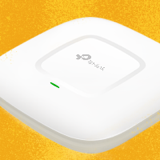
Hi @Jeffjones72,
I don't use an Omada router, but I do have an Ooma Telo. From what I can tell, it just needs internet access like any other wired internet device and didn't require any special network settings to make it work. I had it directly connected to my Verizon router for a while. I moved it behind my pfsense firewall also connected to the Verizon router and later I removed the Verizon router. The Ooma Telo has two ports, so be sure to use the "Internet" port; other than that, it should be plug-n-play.
- Copy Link
- Report Inappropriate Content
I've worked with Ooma support quite a bit on this and it works fine connected directly to my ONT fiber modem but it does not work connected to my ER605 router. Basically what looks like's happening is that the NAT process is causing the open VPN connection that the Telo device uses to fail to form.
Short of getting a business fiber plan and having multiple IPs so I could do a one to one NAT mapping I'm not found any solution working on this for over a week. I initiated cancellation of my service and returns on all hardware.
Until we can get new cell phones that will allow us to do calling over Wi-Fi we're just going to use Google voice and I'm going to custom program some automations on our phones to turn on forwarding when we are at home and turn it off when we leave.
- Copy Link
- Report Inappropriate Content
Information
Helpful: 0
Views: 251
Replies: 11
Voters 0
No one has voted for it yet.