
How Omada Can Save the Planet (or, just your Network)
 NeilR_M

Earth Day 2026 – How Omada can Save the Planet (or, just your Network)
Omada products are designed to meet your business networking needs, including those of you who are more ecologically minded. Here are a few practical ways to make your Omada network more environmentally friendly!

Enabling EEE – Energy Efficient Ethernet (802.3az)
Energy Efficient Ethernet, also known as IEEE 802.3az, is a technology designed to reduce the power consumption of an Ethernet device when it is not in use. When a switch with EEE enabled detects that a port has been idle for a specified period, it disables the transmitter on that port, reducing its power consumption. A study done by researchers at the University of Vigo (Universidade de Vigo) made a very interesting comparison between the two common algorithms used by EEE to accomplish its task; you can find that study here.
This feature is great for homelab environments, as it can disable the transmitter on ports that are not in use. This means lower costs on your energy bill and more money to spend on new hardware necessities. However, in business-critical environments, you may want to disable the feature due to the risk of delays when EEE transitions from Low Power Idle to normal operations. It’s also important to note that both the switch and the client need to support EEE, as the client must send the Low Power Idle packet to prompt the switch to change states.

Reducing Transmit Power and Implementing Port Scheduling
Wireless APs require a specific power level to broadcast their signals, so reducing broadcast power will lower your network's overall power consumption. It also comes with the added benefit of hardening your network, reducing the physical attack range of would-be threats. Like Limbo, the question becomes, “How low can you go?” To answer that question, you’ll need to look at RSSI. RSSI (received signal strength indicator) is a measure of the power received by a radio signal and is measured in negative decibels (dBm). An RSSI of -30 dBm to -60 dBm is considered ideal, and anything below -80 dBm is very weak. The goal is to reduce your power levels as much as possible while still keeping a majority of your wireless clients within that -30 to -60 dBm range. There are other ways to maintain your client experience while staying green, including implementing a Minimum RSSI for your EAPs. You can find out more on the following FAQ: Understanding and implementing Minimum RSSI
You can also implement port scheduling to save power consumption. By setting a specific time range in the Omada Controller, you can control when certain ports are enabled or disabled. This can save your network power by turning off devices during hours they aren’t needed. A great example would be a restaurant turning off its APs outside of business hours, or a parent turning off the AP in their children’s room after bedtime. Port Scheduling is outlined in the User Guide for the Omada Controller: Omada Controller User Guide
Solar Power
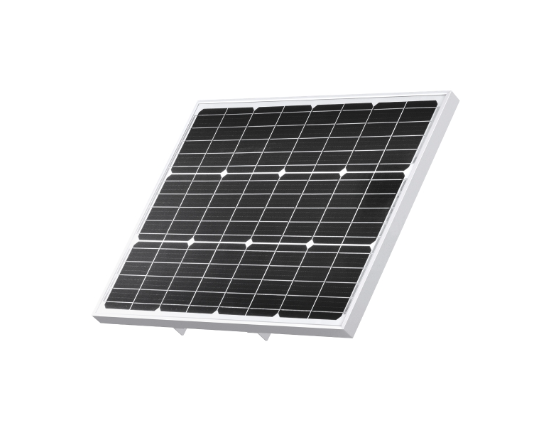
PoE is great for reducing the amount of cabling in your network. But what if your devices didn’t need to pull power from your switches at all? VIGI’s solar power system can let you do just that. The system can power your devices even in remote areas and generates power using the sun, potentially saving hundreds of kWh per year! Less power from PoE means lower CO2 emissions as well, helping everyone do their part to keep the environment safe. Check out the VIGI Solar Power Solution here!
Want to share your tips and tricks for keeping your Omada Network green? Let us know in the comments!
