TL-SG1218MPE – Looking for suggestions on replacing internal fans (noise reduction)

TL-SG1218MPE – Looking for suggestions on replacing internal fans (noise reduction)

TL-SG1218MPE – Looking for suggestions on replacing internal fans (noise reduction)
2 weeks ago
Tags: #PoE
Model: TL-SG1218MPE  
Hardware Version: V5
Firmware Version: TL-SG1218MPE 5.0

Hi everyone,


I’m currently using a TP-Link TL-SG1218MPE 18-Port Gigabit Easy Smart PoE+ switch in my rack, and it has been working well for my setup. However, the internal fans are noticeably loud, and I’m exploring options to reduce the noise.


The switch currently comes with two RUNDA RS4020B12H-RA fans, which produce a noise level of 45 dBA (louder than the listed 30 dBA). Here are the fan specifications:

  • Model: RS4020B12H-RA

  • Type: DC Axial Fan

  • Voltage: 12V DC

  • Rated Current: 0.12A

  • Rated Power: 1.44W

  • Airflow: 16.5 CFM (Cubic Feet per Minute)

  • Fan Speed: 4200 RPM (Revolutions per Minute)

  • Noise Level: Listed 30 dBA (actual 45 dBA)


I’ve seen many posts and videos suggesting replacing the stock fans with Noctua fans, but they are quite expensive—around $50 for two fans. As a more budget-friendly alternative, I was considering Chinese-made fans with similar specifications. However, I’ve encountered one potential issue: the stock fans use a 3-pin connector (Power, Ground, and Tach signal), while most available replacement fans only have a 2-pin connector (removing the Tach signal wire).


From my research, I understand that using a 2-pin fan may cause the switch to trigger a fan issue warning light, which would be fine for me, but I’m concerned about any long-term effects or potential problems with replacing the fans in this way.


Additionally, my current maximum power usage is only 30W out of the 230W the switch is rated for. Given that my switch is well-ventilated, would it be okay to simply remove the fans entirely and not use any replacement fans?


Has anyone here replaced the fans on this model (or similar TP-Link switches)? If so, I would appreciate any insights into the following:

  • Reliability of using 2-pin fans instead of 3-pin

  • Potential issues that could arise over time

  • Any specific fan recommendations (preferably quieter and similar airflow)


Thanks in advance!

  0      
  0      
#1
Options
7 Reply
Re:TL-SG1218MPE – Looking for suggestions on replacing internal fans (noise reduction)
a week ago

  @Martin_LC 

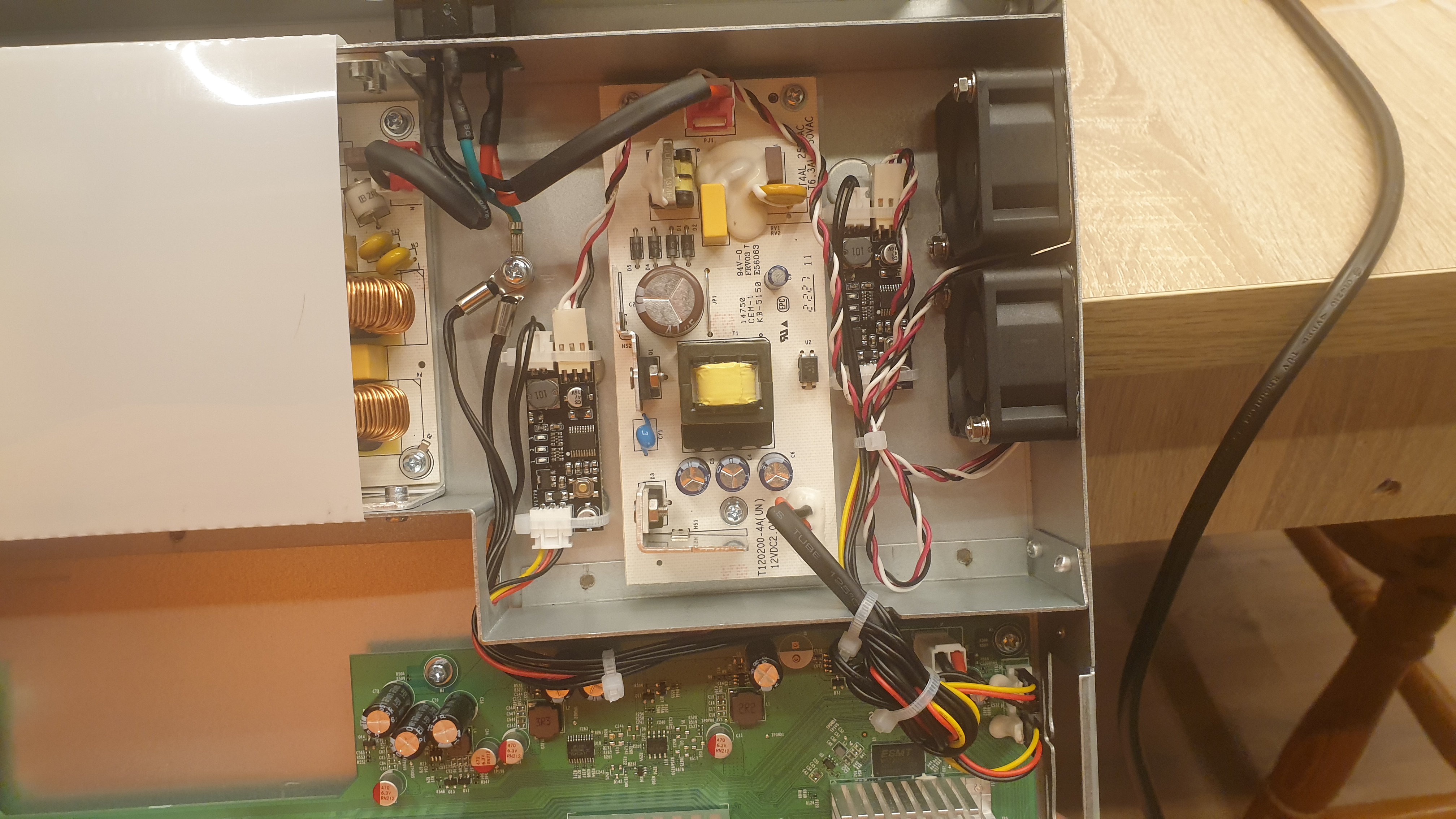
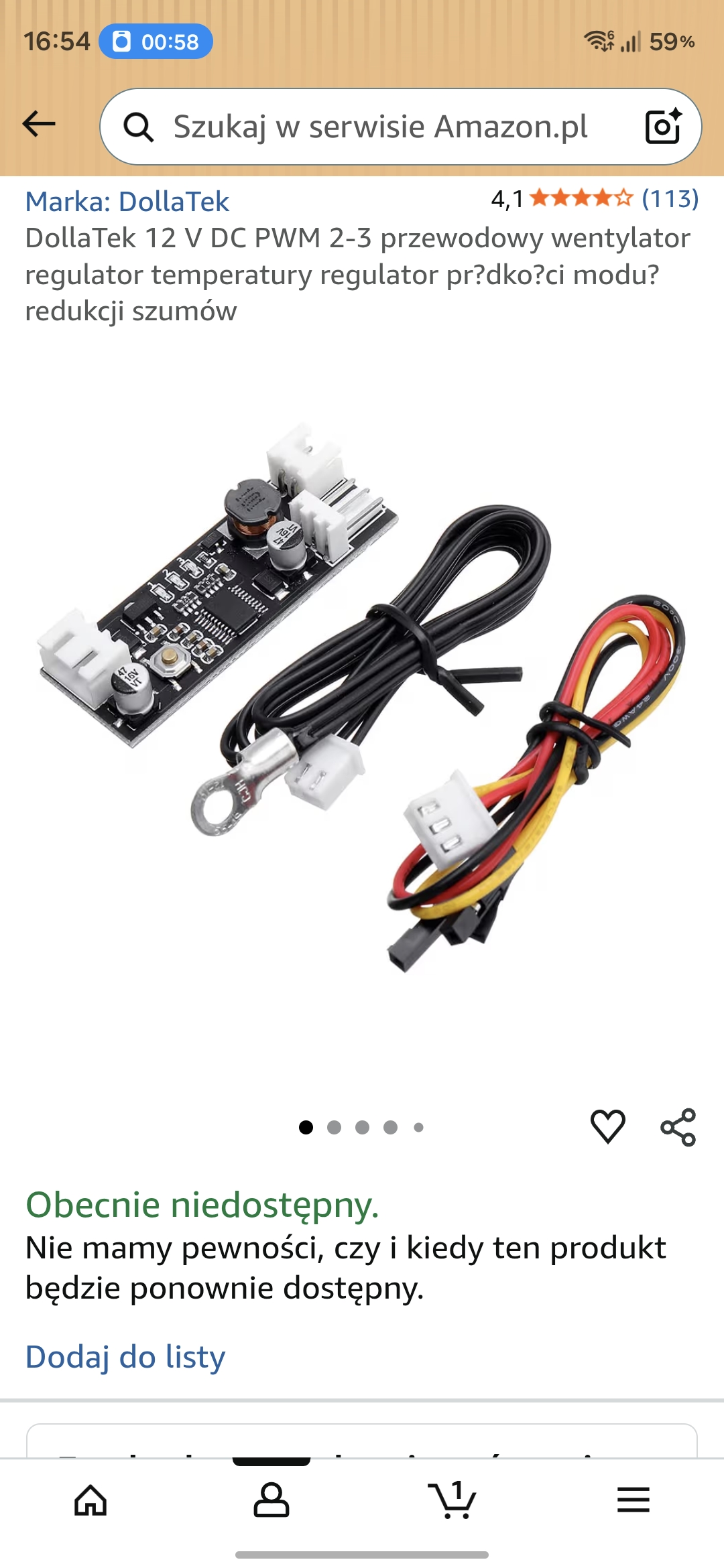
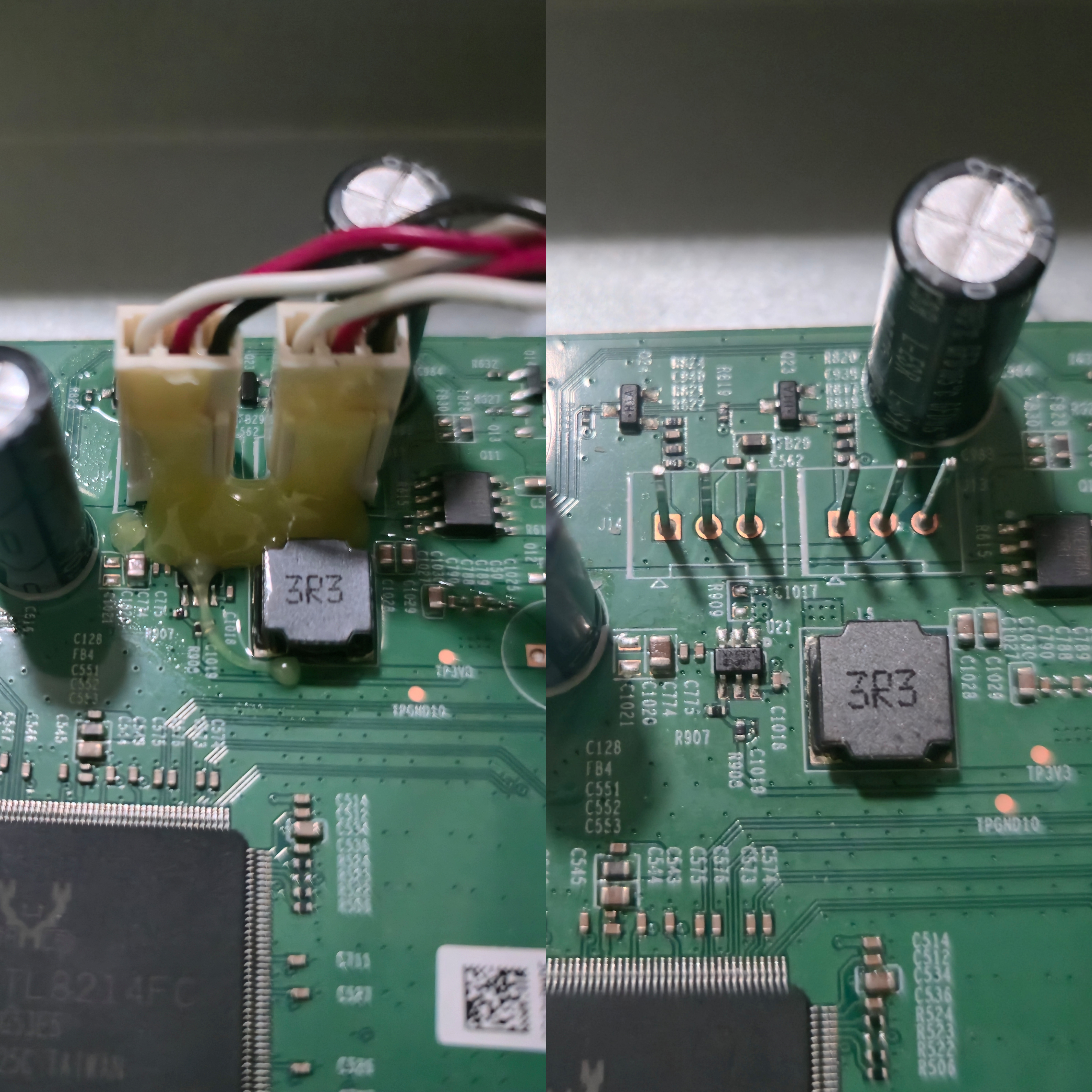
Hey, I had the same problem with my switch and was also considering these fans, but I found a cheaper solution: installing two PWM controllers with temperature sensors in the factory fans. They cost $3 each. It's definitely quieter now, and if it gets too hot, it will run at full power. The only downside to this solution is that the fan LED lights up yellow and a message appears in the controller, but there's also a way to fix that: adding a capacitor... I'm sending photos of my modification (it's been working like this for a year).


ER605 v2.0 | TL-SG3428MP v5.0 (PoE+) | 3x EAP653 v1.0 | 1x EAP613 v1.0 | Omada Controller on RPi 4b | Full PoE Power
  1  
  1  
#2
Options
Re:TL-SG1218MPE – Looking for suggestions on replacing internal fans (noise reduction)
a week ago

Hi @Klimek 
 

Thanks a lot for sharing this! I really appreciate you taking the time to explain your solution and also for sharing the photos.
 

Honestly, I never even thought about using a PWM controller with a temperature sensor on the stock fans — this is a clever and can be cost-effective approach.

Really appreciate you sharing your experience and the details. This is exactly the kind of solution I was looking for.

Thanks again!

  1  
  1  
#3
Options
Re:TL-SG1218MPE – Looking for suggestions on replacing internal fans (noise reduction)
a week ago

Hi  @Martin_LC 

Thanks for posting in our business forum.

Unfortunately, we do not recommend disassembling the device or attempting to replace any components yourself, as this will void the warranty. Additionally, we will not be responsible for any subsequent product issues that may arise.

Best Regards! >> Omada EAP Firmware Trial Available Here << >> Get the Latest Omada SDN Controller Releases Here << *Try filtering posts on each forum by Label of [Early Access]*
  0  
  0  
#4
Options
Re:TL-SG1218MPE – Looking for suggestions on replacing internal fans (noise reduction)
a week ago

  @Hank21 

Hi 

Thank you for the standard warranty reminder, but let’s be honest: if TP-Link actually listened to its users, this hardware modification wouldn't be necessary in the first place.


The issue of loud, constant-speed fans in the Smart/Managed switch series has been a recurring complaint on these forums for years. In my specific case, the switch is currently using only 52W out of its total 384W PoE budget (roughly 13% capacity). The device is barely warm, yet the fans run at maximum RPM as if it were under full thermal load. This noise level is unacceptable for small office or home environments.


What’s even more disappointing is that I fixed this "noise problem" myself using a simple PWM controller with a temperature sensor that costs about $3. It’s a cheap and effective solution. The real question for your R&D department should be: Why hasn't TP-Link implemented a simple firmware update to allow for temperature-based or PoE-load-based fan control?


This is a software-level fix that would solve the noise issue for thousands of customers. Since the "Smart" features of the switch don't actually include smart thermal management, we as users are forced to choose between our ears and our warranty. I chose silence, and as you can see from the feedback, that is what the market actually needs.


Perhaps it's time for TP-Link to start fixing long-standing design flaws instead of just warning users not to fix them ourselves.


Best regards!

ER605 v2.0 | TL-SG3428MP v5.0 (PoE+) | 3x EAP653 v1.0 | 1x EAP613 v1.0 | Omada Controller on RPi 4b | Full PoE Power
  2  
  2  
#5
Options
Re:TL-SG1218MPE – Looking for suggestions on replacing internal fans (noise reduction)
Wednesday

Hi @Hank21,

Thank you for the reminder. To be honest, I currently don’t care much about warranty because I have a home lab, and this switch is located very close to my desk. During work hours, if I’m not using headphones, I can hear the noise from the fans, which is quite irritating. I’m really wondering why TP-Link is ignoring the suggestions from many of us and continuing to produce switches with such loud fans. Since I believe you represent TP-Link, please pass this concern along and consider it as product feedback.

  0  
  0  
#6
Options
Re:TL-SG1218MPE – Looking for suggestions on replacing internal fans (noise reduction)
Wednesday

Hi @Klimek,
 

As per your suggestion of using a PWM controller for the stock fans, I tried to find it both online and offline market, but unfortunately, I had no luck. Instead, I found replacement fans—although not Noctua fans, but cheap Chinese-made ones. I bought two for $1.62 and replaced the stock fans with these. They are very quiet now, the noise is barely noticeable, and I can definitely live with these.
 

While removing the fans, I noticed too much hot glue held all the clips in place. People usually scrape it off, but I recommend using 90%+ isopropyl alcohol to remove it without making a mess. I poured a lot of it on the clips, waited a couple of minutes, then pulled it off. It came off easily and didn't leave any residue.


The wiring configuration for a 3-pin stock fan:

White wire is for the Tachometer
Red wire is +12VDC
Black wire is Ground (GND)

If anyone is looking to replace the stock fans, I would highly recommend trying to get a PWM controller for the stock fans first.

Thanks again, @Klimek. I really appreciate it.

  1  
  1  
#7
Options
Re:TL-SG1218MPE – Looking for suggestions on replacing internal fans (noise reduction)
Thursday

Hi  @Klimek 

TP-Link has recognized customers' demand for silent operation. The currently available products are based on older hardware designs, which cannot achieve further noise reduction through software updates.

While this model will also undergo updates and iterations in the future.

Our company does not recommend DIY modifications due to safety considerations, not because we disregard user needs.

Best Regards! >> Omada EAP Firmware Trial Available Here << >> Get the Latest Omada SDN Controller Releases Here << *Try filtering posts on each forum by Label of [Early Access]*
  0  
  0  
#8
Options