
Early Access New Firmware for Archer BE800 V1 to Support VPN Merge,Guest/IoT Network Extend in EasyMesh, and More


Hello everyone!
We are pleased to announce the latest firmware update for the Archer BE800 V1, which introduces a range of new features, especially significant enhancements to the VPN Feature and EasyMesh Network usage.
We encourage all users to upgrade to the latest firmware and share your feedback with us. Your valuable opinions are crucial to our continued product improvement! We look forward to your experience!
Download the update now and experience your router's new features!
New Features/Enhancements:
1. Enhanced VPN feature
(1) VPN Merge
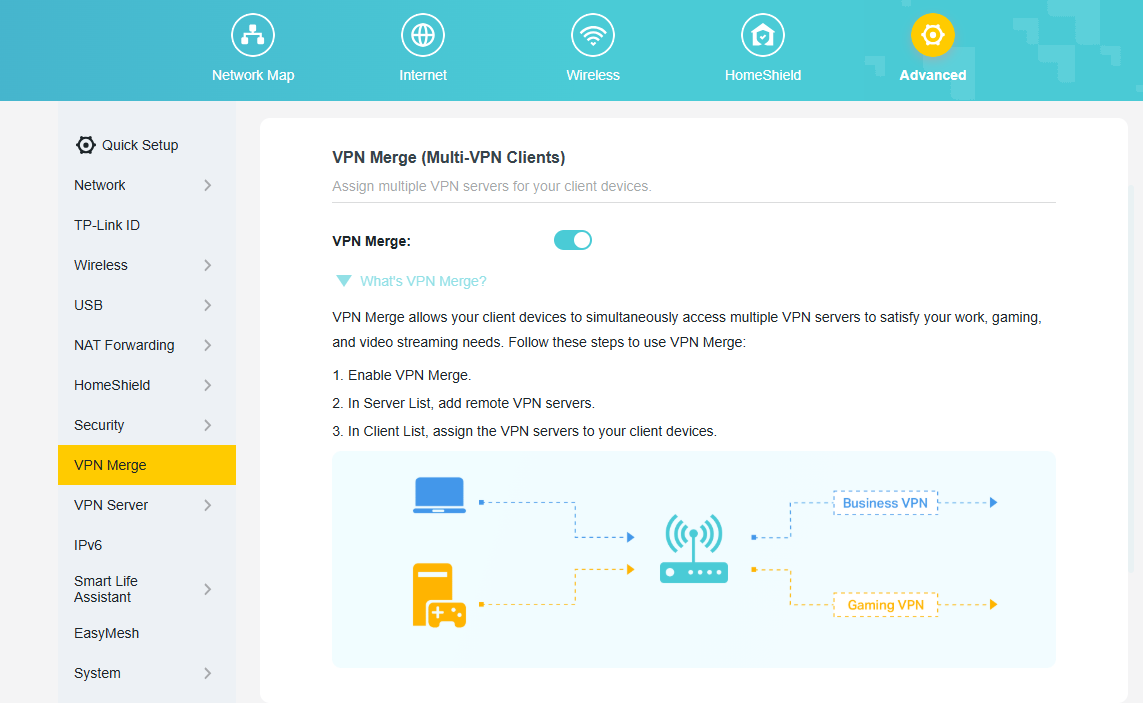
We have officially upgraded the previous VPN Client feature to the new, more powerful VPN Merge. This optimization significantly enhances the flexibility of your network. With VPN Merge, you can now connect different devices on your network to multiple VPN servers simultaneously. For example, your work laptop can connect to a corporate VPN while your smart TV uses another VPN for video streaming. To use this feature, simply enable VPN Merge, add your desired servers to the Server List, and assign them to specific devices in the Client List.
(2) VPN Kill Switch
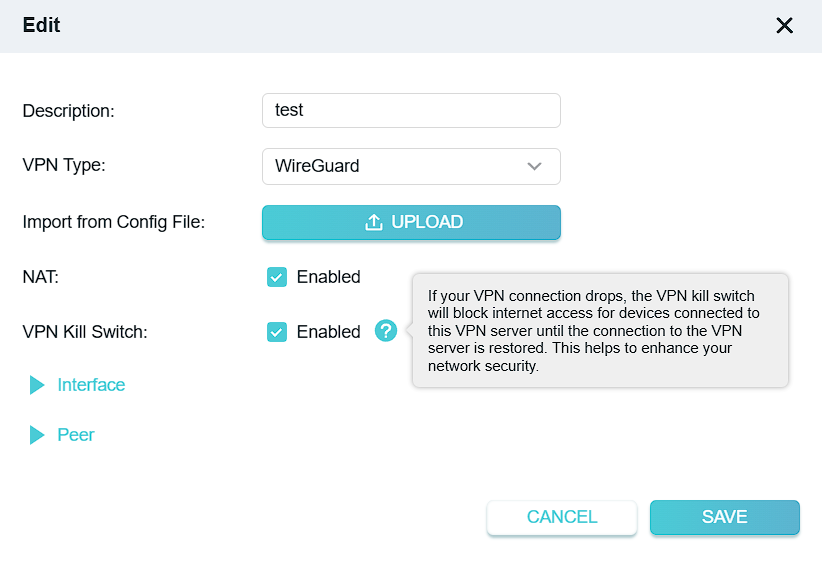
The VPN Kill Switch to improve your network security. When you enable this feature for a VPN server, it will continuously monitor the connection status. If your VPN connection drops unexpectedly, the Kill Switch will immediately block internet access for all devices using that VPN. This protection remains active until the connection to the VPN server is safely restored, preventing potential data leaks.
(3) Other Enhancements:
- Supports DDNS synchronization during OpenVPN server configuration.
- Add third-party VPN support when configuring the VPN Client: IPVanish, PureVPN.
2. Enhanced EasyMesh Network
(1) EasyMesh Traffic Separation (*Extend Guest Network)
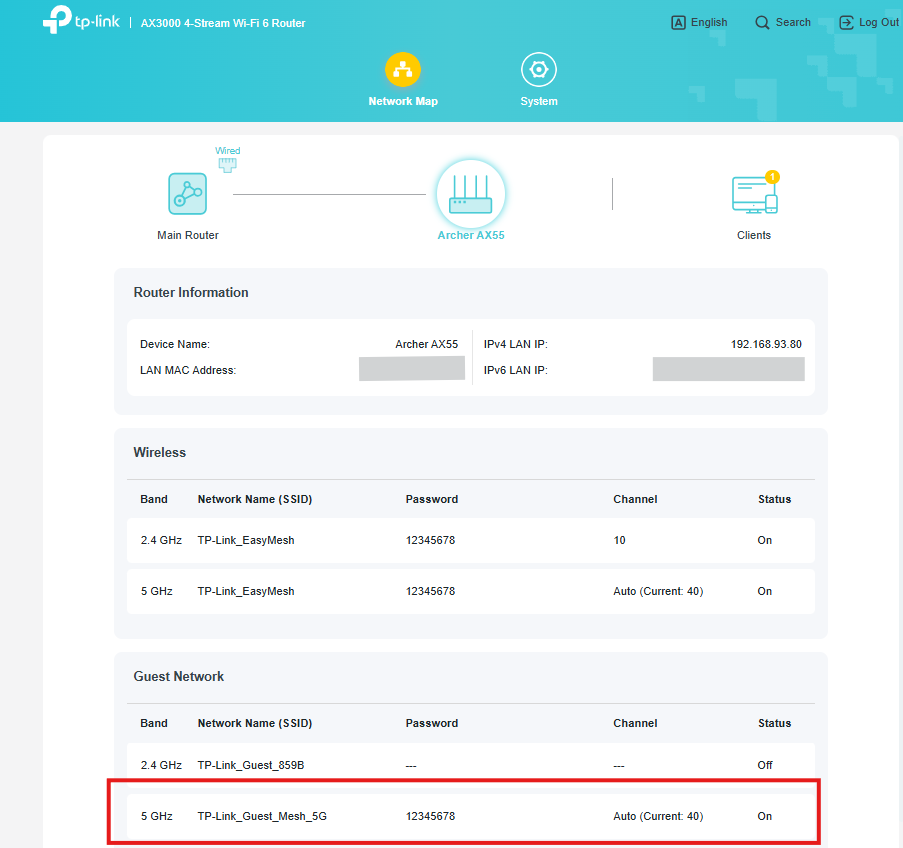
We have introduced the Traffic Separation feature within the EasyMesh R3 protocol, enabling the synchronous extension of the main router's Guest Network capabilities to satellite devices. This enhances the security of your main network.
(2) IoT Network configuration synchronization
We have introduced the capability to synchronize certain IoT Network configurations from the main router to satellite devices, further enhancing the performance of EasyMesh satellite units.
(3) EasyMesh Client Binding
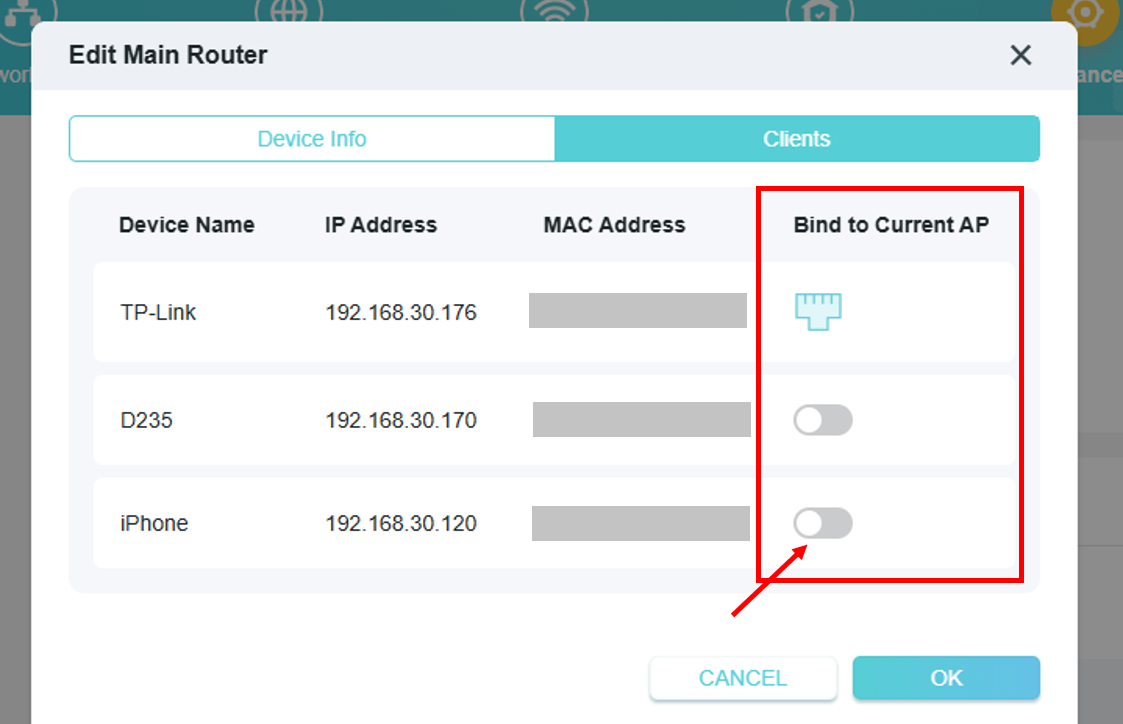
EasyMesh Client Binding allows you to pin specific devices (e.g., smart TVs or IoT sensors) to a designated EasyMesh node, preventing unnecessary roaming and improving connection stability for latency-sensitive or stationary clients.
(4) EasyMesh Satellite Node Binding
EasyMesh Satellite Node Binding allows you to manually specify which upstream node a satellite should connect to.
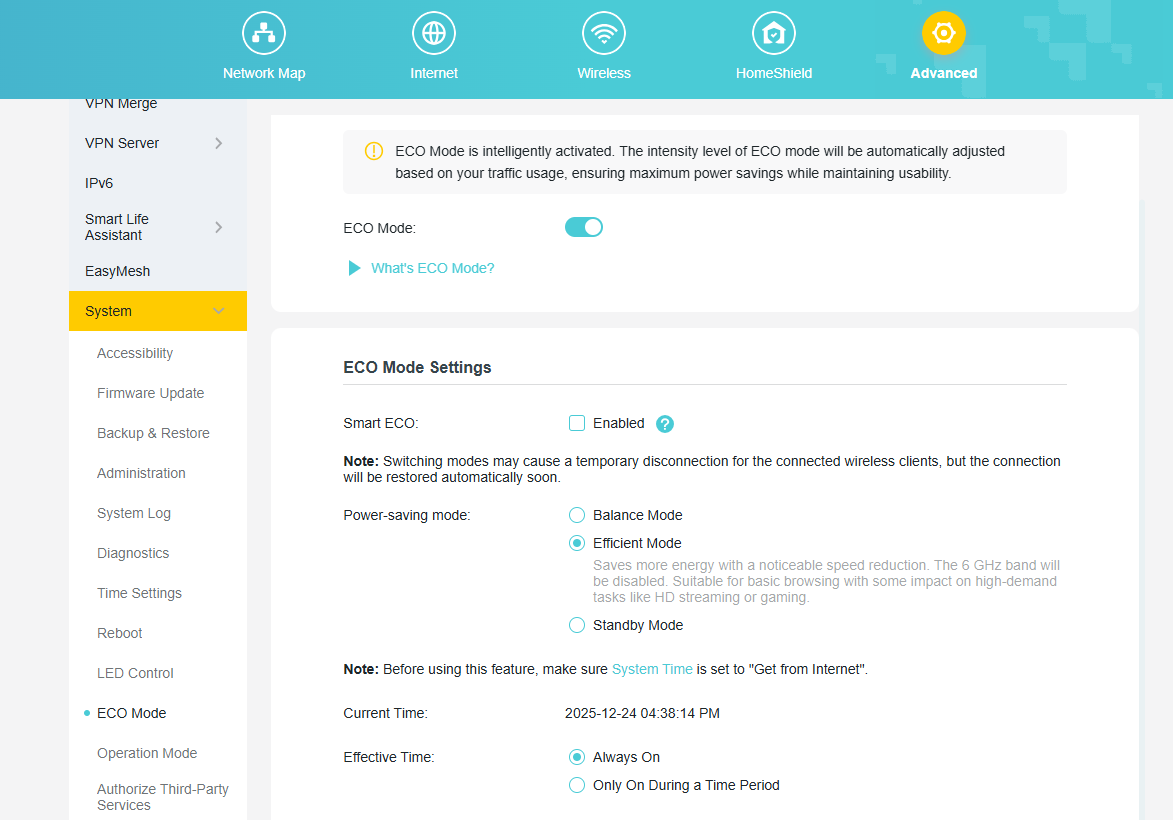
3. ECO Mode V2
The new ECO Mode Feature is designed to help you save power intelligently. You can select the default Smart ECO mode, which automatically adjusts power consumption based on your real-time traffic usage and turns off the LEDs. This minimizes the impact on your regular internet activities while reducing energy use. For more personalized control, you can also choose from several other power-saving modes and even schedule them to be active only during a specific time period.
4. Admin Password Recovery
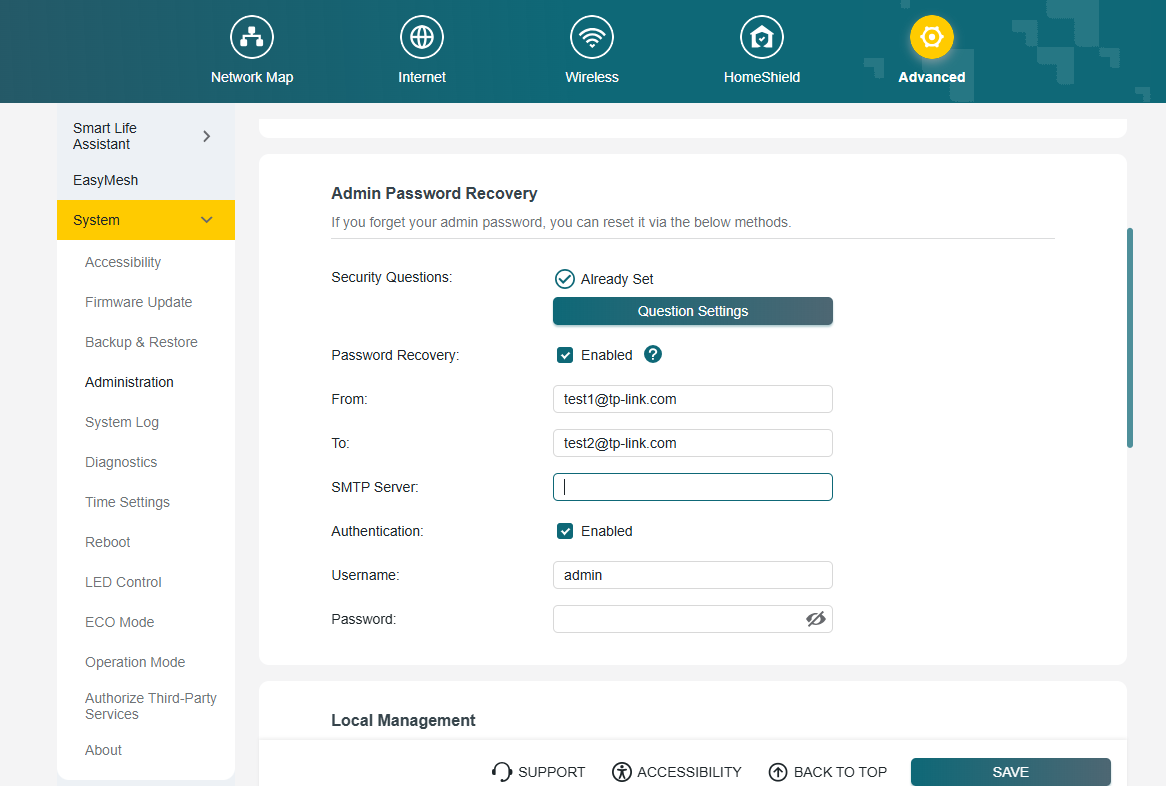
We have introduced new methods to recover your local administrator password, ensuring you never lose access to your router's settings. You can now choose between two secure recovery options. You can enable and configure these options under System > Administration.
(1) Security Questions
Set up answers to predefined security questions. This allows you to verify your identity and reset your password quickly.
(2) Email Recovery
Configure a designated email address and your own SMTP server to receive password recovery instructions directly to your inbox.
5. Advanced USB Feature
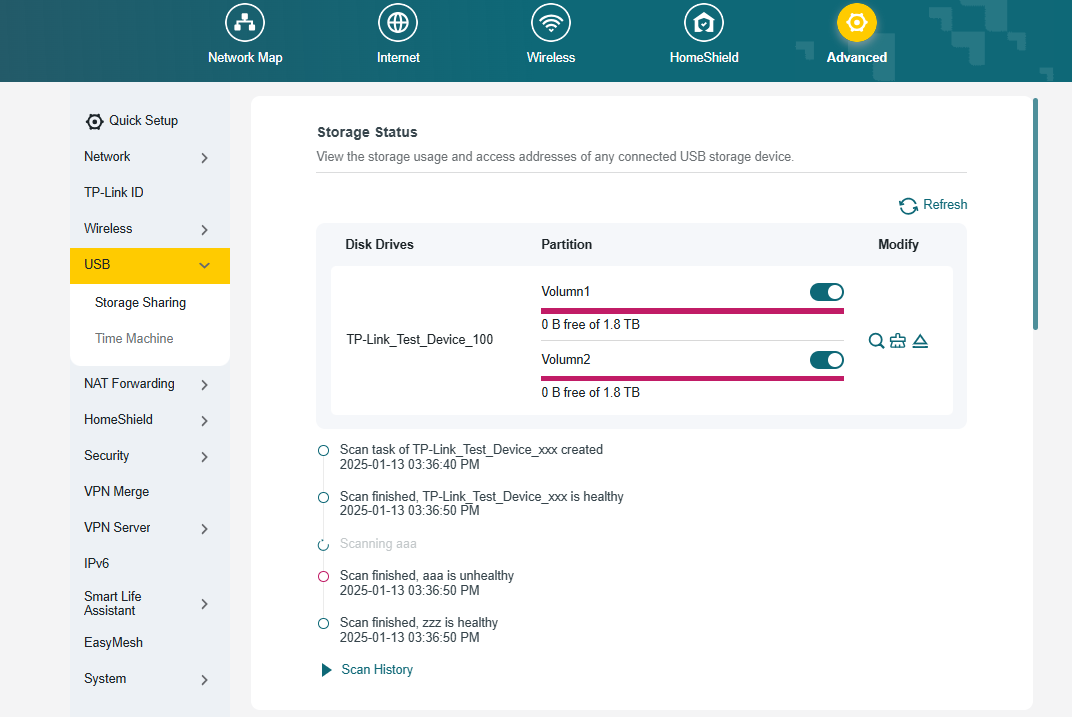
We have upgraded the USB Sharing feature with two powerful new management tools. First, you can now perform a Disk Scan to verify the health of your connected drive. This can be triggered manually or scheduled to run automatically at regular intervals for proactive data protection. Second, we have integrated a Format function, allowing you to format a USB drive directly from the router's interface without the need for a computer. These features provide greater convenience and control over your network storage.
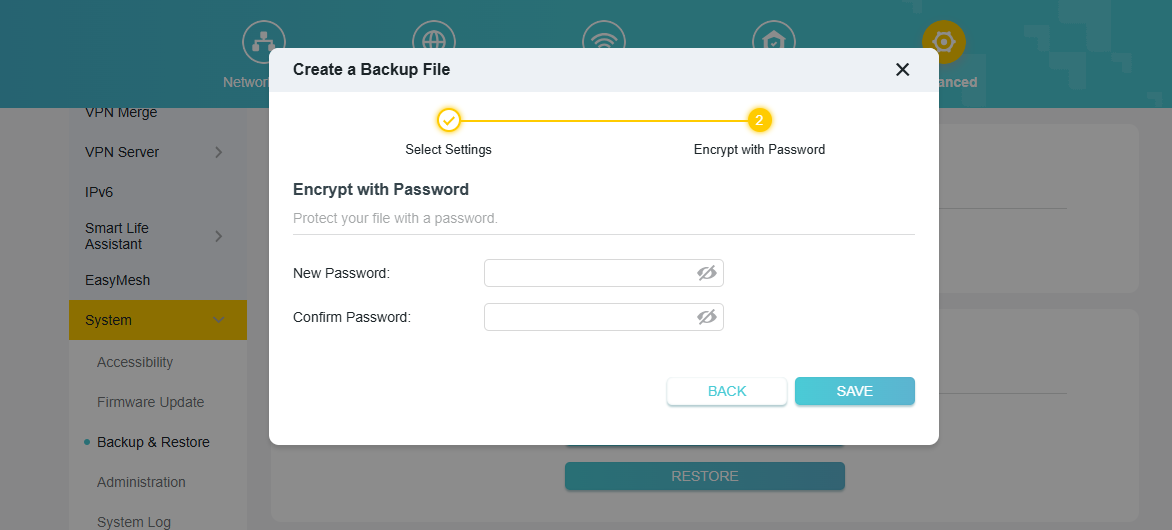
6. Backup & Restore
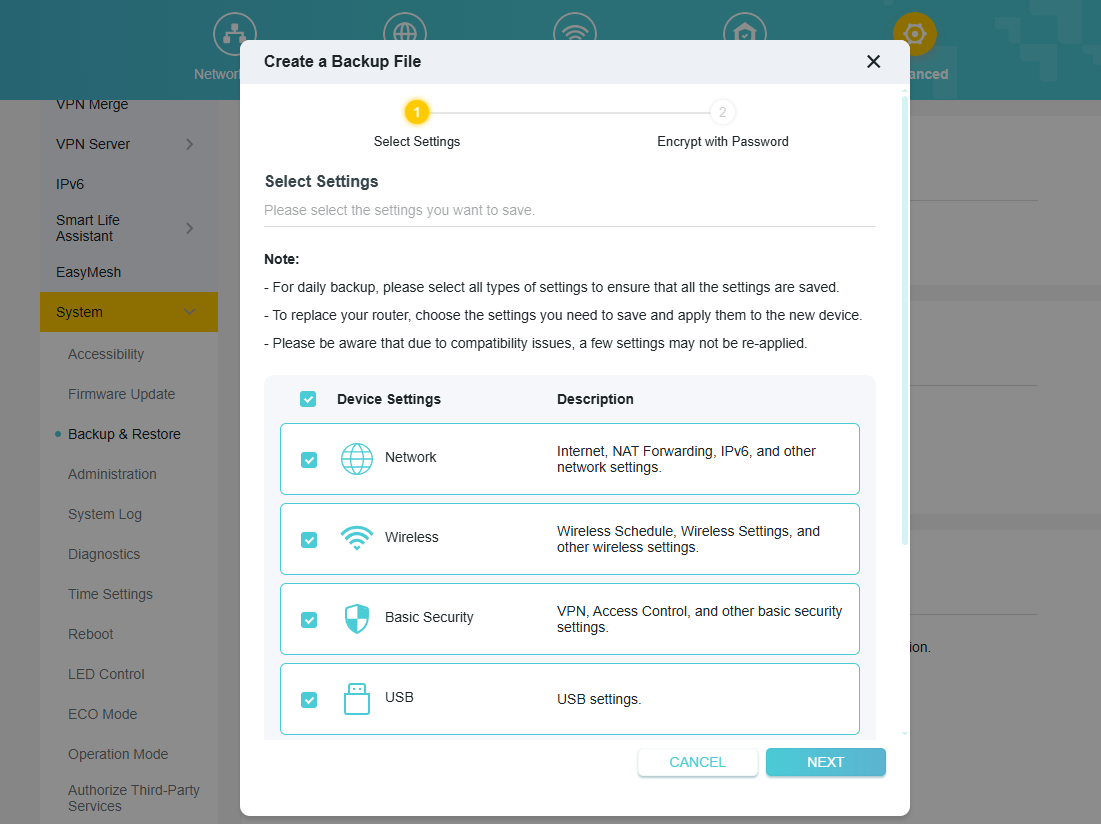
We have significantly upgraded the router's backup functionality for greater control and security. You can now perform a Selective Backup, allowing you to choose specific configuration modules to save, such as Network, Wireless, or Security settings. Additionally, you can now encrypt the backup file with a password, ensuring your sensitive configuration data is protected from unauthorized access.
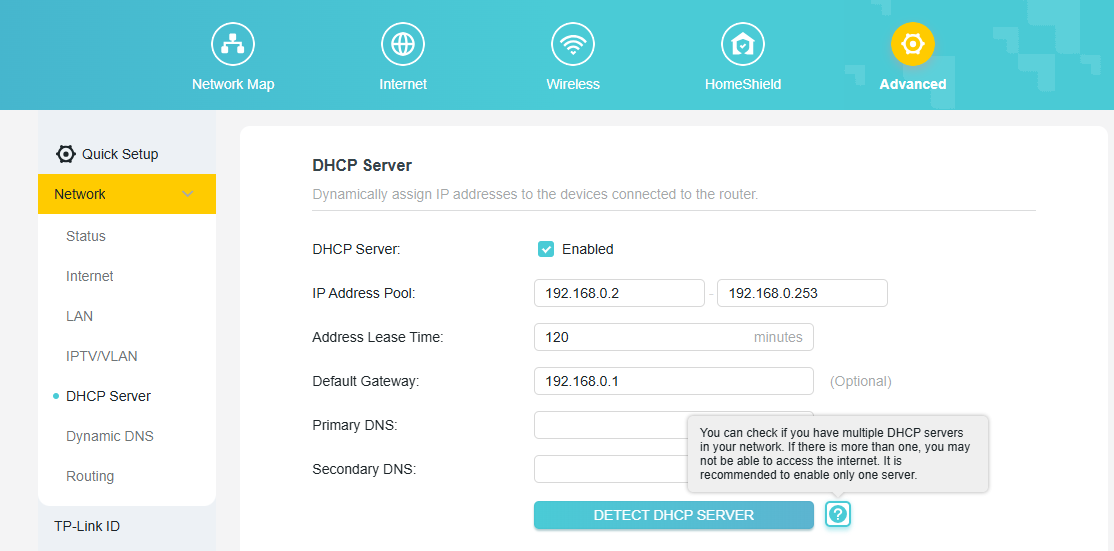
7. DHCP Detection
To help you troubleshoot common network issues, we have added a DHCP Server Detection tool. Having more than one DHCP server active on a network can cause IP address conflicts and prevent devices from accessing the internet. This new one-click tool allows you to scan your local network to easily identify any other active DHCP servers, helping you resolve conflicts to ensure a stable and reliable connection.
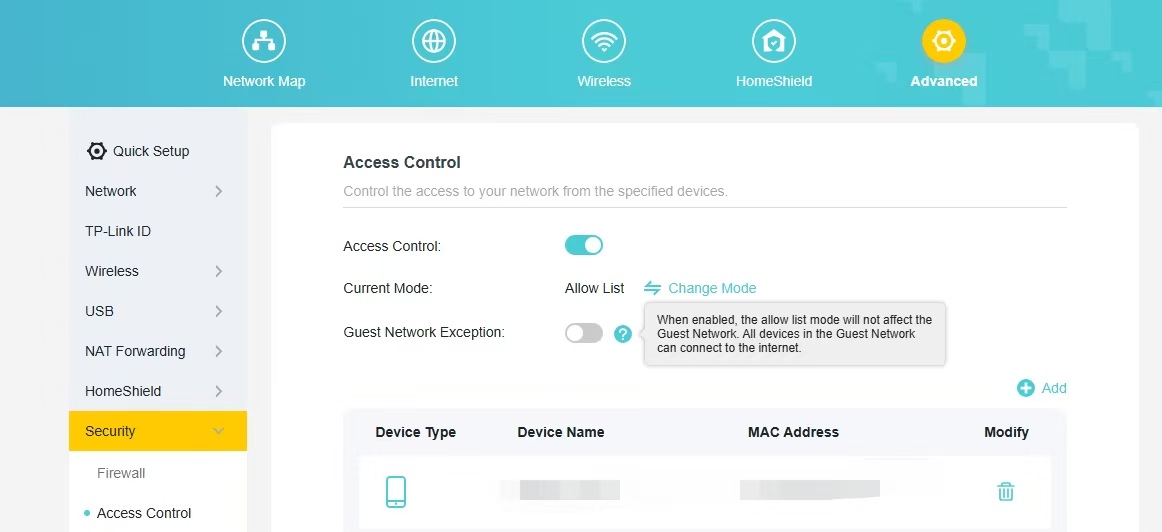
8. Guest Network Exception Button
Add a button to the Access Control whitelist that does not apply to the Guest Network. When enabled, the allow list mode will not affect the Guest Network. All devices in the Guest Network can connect to the internet.
9. New features on Tether App
(1) Added support for TSS (TP-Link Simple Setup) Auto Discovery & Quick Configuration of Tether APP.
(2) Added support for QoS (Quality of Service) configuration within the Tether App.
Other Enhancements/Bug Fixes:
(1) Optimizations of IPv6 Dial-Up Methods and Functional Experience.
(2) Enhanced system security, stability, and performance.
Firmware Download:
Before the Upgrade
(1) Please be sure you have read the Beta Test Agreement before upgrading the pre-release firmware!
(2) For the sake of insurance, it's always recommended to save a copy of the router's Backup Config file before upgrading or downgrading.
(3) This pre-release firmware for Archer BE800 V1 is available for all versions (EU/US/AU/CA/etc).
(4) You may follow the guide to upgrade the firmware of your router. How to Upgrade the Firmware on the TP-Link Wi-Fi Routers.
(5) This version of the software can't be degraded to the previous official version.
Direct Firmware Download Link
| Archer BE800_V1 | Archer BE800_V1_1.4.1 Build 20260313 (Pre-Release Firmware) |
Additional Information
As always, we value your feedback. If you happen to encounter any concerns during or after the router firmware upgrade, please leave a message below and provide the following information. Your feedback helps us continuously improve and provide you with better products and support.
Please provide detailed information, including but not limited to:
- A complete network topology diagram.
- The device's connection method, and whether EasyMesh networking is enabled.
- Screenshots of relevant error messages, etc.
Thank you for your continued support and for being a member of our community.
Updated Log:
Updated to Build 20260130 Pre-Release Firmware (Feb 3rd);
Updated to Build 20260313 Pre-Release Firmware (Mar 19th).
- Copy Link
- Subscribe
- Bookmark
- Report Inappropriate Content

it's been a couple weeks since the last beta version, do you have any updates or news regarding a new (beta) firmware? Are there any ongoing issues that still need to be resolved? Is a public release (date) in sight yet? Please let us know....
- Copy Link
- Report Inappropriate Content

I’m testing the current pre-release EasyMesh firmware and I think I may be hitting a UI/feature exposure bug or partial rollout.
My setup:
- Main router: Archer BE800 V1
- Satellite: Archer BE550 V2
- EasyMesh mode enabled
- BE550 connected as EasyMesh satellite
Firmware versions currently installed:
- BE800 V1: 1.4.1 Build 20260313 rel.47813(5553)
- BE550 V2: 1.3.1 Build 20260303 rel.49110
These appear to be the current pre-release builds from these forum threads:
- BE800 pre-release thread
- BE550 V2 pre-release thread
What is working:
I do have VPN Merge now on the BE800, so I know the BE800 pre-release is active.
My IoT Network now extends to the satellite, which did not happen on my previous firmware.
In Advanced > EasyMesh, I can click the Modify/Edit icon for the main router and go to the Clients tab.
In that pop-up, I do see “Bind to Current AP” for clients.
What is not showing:
The EasyMesh menu in the sidebar is not expandable on my BE800 UI.
I am not seeing the additional EasyMesh pages/options shown in the pre-release screenshots in the forum posts.
I am also not seeing a clear way to move/pin a client to the other node. The only option I currently see is “Bind to Current AP”, which only helps if the client is already connected to the node I want.
Any help on this matter is greatly appreciated
EDIT: I just realized I was getting two posts confused. It is the post for the BE550 V2 ( here: https://community.tp-link.com/en/home/forum/topic/853652 ) that shows the advanced EasyMesh options. Are these not coming to the BE800?
- Copy Link
- Report Inappropriate Content
Hi @Lyfesaver ,
Yes, as you can see, this is a feature introduced in the BE550-v2. Generally speaking, the main router primarily displays the functions it supports.
- Copy Link
- Report Inappropriate Content
- Copy Link
- Report Inappropriate Content
Hello @Lyfesaver ,
EDIT:
If you want to use the unique features of the BE550 V2, you might consider setting up the BE550 as your main router.
Some features, such as EasyMesh client binding and EasyMesh satellite node binding, require both the main router and satellite routers to support them for them to display and apply correctly.
On the BE550, it has Roaming Bindings for Client Affinity. This is basically similar to the EasyMesh Client Binding of BE800.
The final performance of the Tapo Cameras also needs to be configured and tested. I understand your return period is tight, which means you need to make a decision quickly. If you ultimately choose to return the item, we understand and respect your decision.
We also hope you can eventually find a suitable product to meet your needs. Please feel free to contact us if you have any questions about our products in the future.
- Copy Link
- Report Inappropriate Content
I am sorry for being difficult but I am genuinely struggling to understand. From what I am reading, you are saying that the BE800 wont get EasyMesh Client Binding and EasyMesh Satellite Node Binding so, in reality, setting the BE550 as my main wont give me EasyMesh Client Binding and EasyMesh Satellite Node Binding?
I am still within my return window for the BE550 and I can give my sister my BE800 if that's the case. I can then get Ubiquiti or Eero as I absolutely have to have this sorted pronto. We have been using the BE800 for a while and we had some Nest cams for security. Wanting to move away from cloud based cameras I bought 6 Tapo cams to replace the Nests and leveraged them using Frigate.
At that point the Tapo cams completely destroyed my WiFi, (computers, phones and smart devices just randomly fail) likely due to congestion. I added the BE550 as a satellite and I can see that the congestion is lowering (using my tinySA Ultra+ ZS407) allowing me to get 4 of the 6 cams working without WiFi devices throughout the house failing randomly. The reason I cant get the other 2 to connect is no matter what I do the cams in the front of the house want to jump right past the BE550 and connect to the BE800 in the back of the house where the 2 cams in back yard and 2 cams in driveway also connect, destroying my WiFi again. I cannot get them to stay on the BE550.
I have lowered the TX of the BE800 to LOW and forced the front cams to connect to the BE550, toggled "Bind to this AP" only to have the dang cams jump right back to the BE800 soon as I give it full TX again.
I am not telling you all this so you can help me with my issues, thats not what this thread is about. I am giving context so that you can see why I might just have to give up the ghost and move to other hardware solutions. I have until Thursday to return the Tapo cams and until the 29th to return the BE550 and I dont wanna have to go thru all of that if there is a way to make things work with the hardware I have and the only solution I see is the EasyMesh Client Binding and EasyMesh Satellite Node Binding.
Again, I apologize for being thick headed but I am still confused as to what I need to do to get EasyMesh Client Binding and EasyMesh Satellite Node Binding working in my house (which we run a daycare out of which is why the cams are essential).
Thank you again, Joseph
- Copy Link
- Report Inappropriate Content

@Joseph-TP Do you know if the BE800 is using HTTP/1.1 for DoH inquieries? I've noticed that DoH queries to any of the Quad9 addresses do not work. I did find this article about this not being supported with Quad9. This maybe something that I need to submit via normal support channels.
- Copy Link
- Report Inappropriate Content
Hello @Lyfesaver ,
Hopefully this won't bother you.
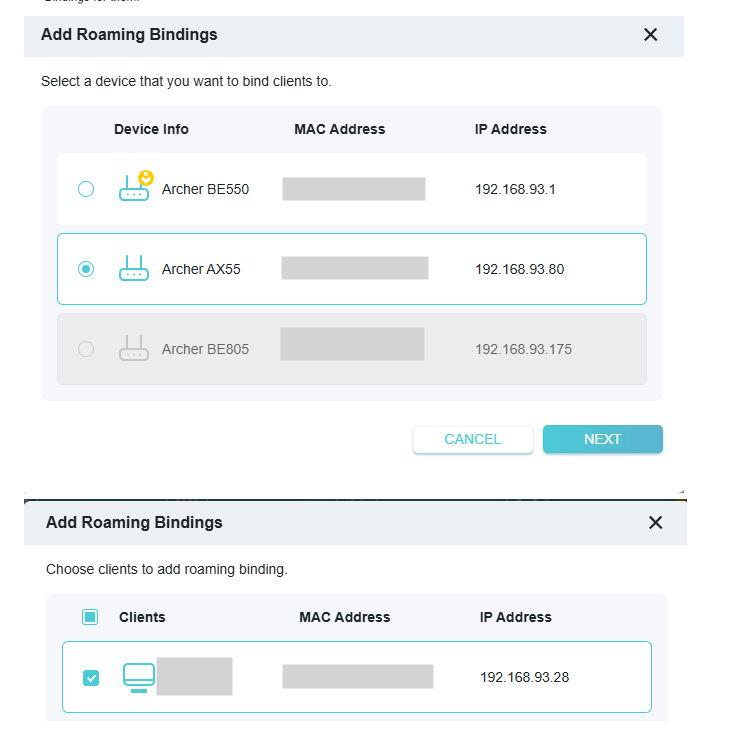
If possible, you can also try setting BE550 to v2 as the main router. This way, you can select network nodes for clients via Add Roaming Bindings.
Joseph-TP wrote
Hello @Lyfesaver ,
EDIT:
If you want to use the unique features of the BE550 V2, you might consider setting up the BE550 as your main router.
Some features, such as EasyMesh client binding and EasyMesh satellite node binding, require both the main router and satellite routers to support them for them to display and apply correctly.
On the BE550, it has Roaming Bindings for Client Affinity. This is basically similar to the EasyMesh Client Binding of BE800.
The final performance of the Tapo Cameras also needs to be configured and tested. I understand your return period is tight, which means you need to make a decision quickly. If you ultimately choose to return the item, we understand and respect your decision.
We also hope you can eventually find a suitable product to meet your needs. Please feel free to contact us if you have any questions about our products in the future.
- Copy Link
- Report Inappropriate Content
Hello @TheSassyBear
No similar feedback has been received regarding the BE800. Could you please provide a screenshot of the error message? If it contains personal information, please cover it up.
Also, have you tried these suggestions:
1. Try Default Mode instead of Ultra Secure Mode: In Advanced > Network > Internet > DoH/DoT section, if you're using "Ultra Secure Mode", try switching to "Default Mode". In Default Mode, the router will use your specified secure DNS servers first, but if these are unavailable, it will fall back to the default DNS server.
2. Temporarily disable DoH/DoT: To verify this is causing the TP-Link ID connection issue, temporarily set the DoH/DoT option to "None" and check if the router can connect to TP-Link ID and shows online in Network Map.
3. Verify DNS server addresses:
• For DoT, make sure you're using the correct server name format (e.g., "dns.quad9.net" or "dns.nextdns.io" with your configuration ID)
• For DoH, verify the complete URL format (e.g., "https://dns.quad9.net/dns-query")
- Copy Link
- Report Inappropriate Content
@Joseph-TP I used the drop down so there should be no issue of typographical errors or the like.
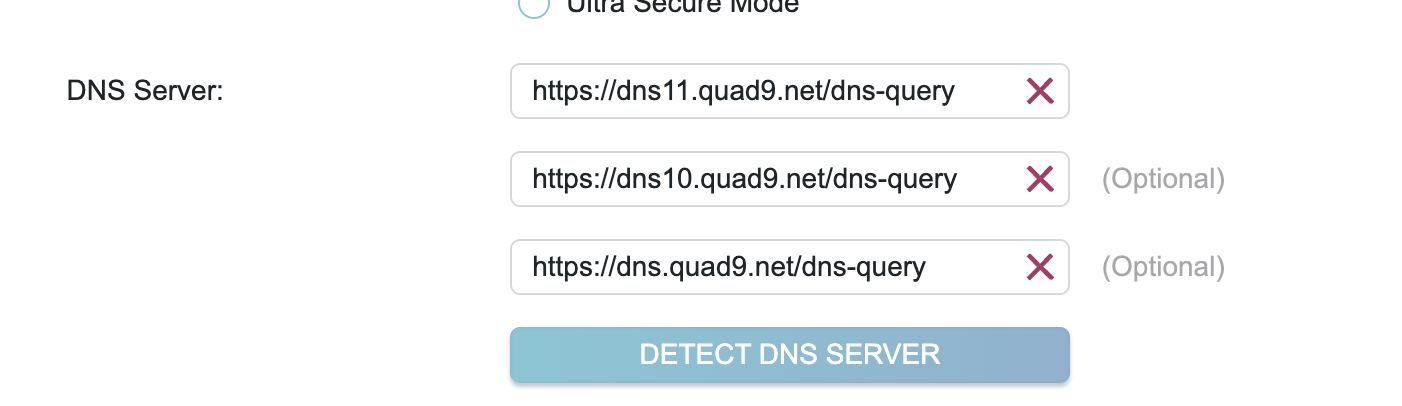
I'd provide a link to the article to where quad9 disabled http 1.1 for DoH; however, the forum said I was posting something not kosher with the ToS. Also, I am using default mode so that things don't break.
- Copy Link
- Report Inappropriate Content
Information
Helpful: 1
Views: 32218
Replies: 235
Voters 1