
Early Access Enhanced EasyMesh Support with Extended Guest/IoT/MLO Networking and Advanced Features for BE550 V2


We are pleased to announce the latest pre-release firmware update for the Archer BE550 V2, delivering significant enhancements to EasyMesh™ capabilities, wireless performance, and network management flexibility. This release introduces comprehensive support for extended guest and IoT networks, MLO backhaul, and a suite of advanced EasyMesh features designed to improve security, stability, and user experience.
We strongly recommend all Archer BE550 V2 users upgrade to this new firmware version to unlock these powerful capabilities. Your feedback remains invaluable - please share your experience to help us continue refining our products.
Key New Features & Enhancements
1. Enhanced EasyMesh Network Management
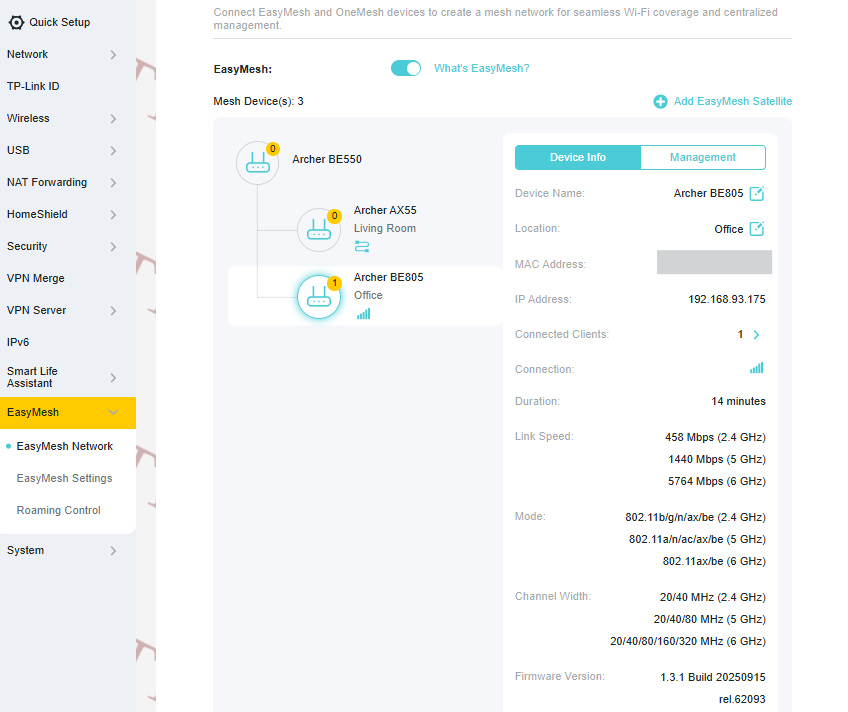
The EasyMesh topology view has been redesigned for improved clarity, offering an intuitive visualization of your mesh network structure. On the Device Info page, you can now view detailed information for each satellite unit, including assigned IP address, number of connected clients, current connection speed.
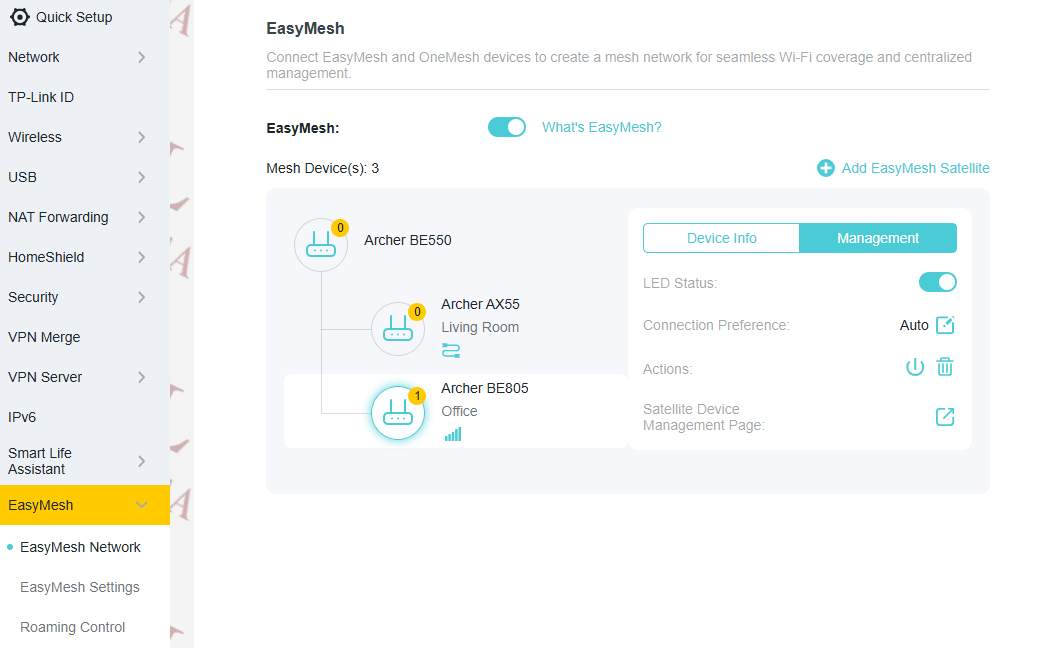
The Management page enables essential administrative actions directly from the main router, such as controlling LED status, rebooting individual satellites, removing devices from the mesh network.
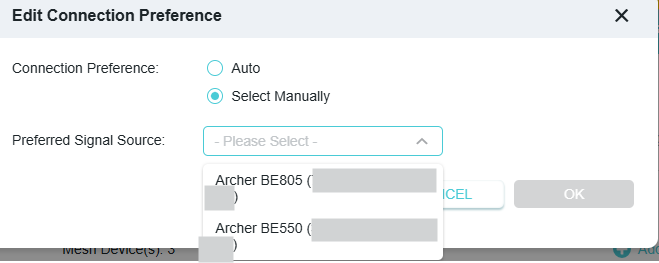
Additionally, a new Connection Preference setting allows you to manually specify which upstream node a satellite should connect to (e.g., directing an AX55 to associate with either the BE550 or BE805).
2. EasyMesh Traffic Separation: Extended Guest & Multi-Networks
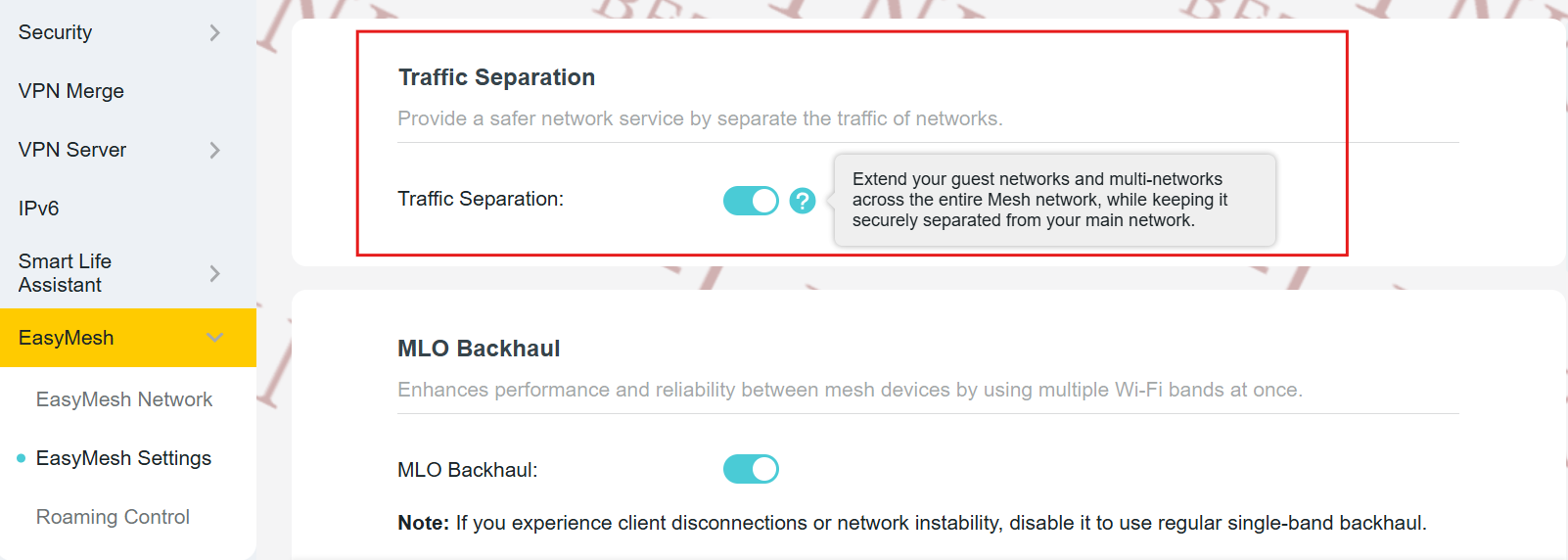
Leveraging the EasyMesh R3 specification, this update introduces Traffic Separation, enabling seamless extension of the main router’s Guest Network and dedicated Multi-Network SSIDs to all compatible satellite units. This ensures logical isolation between primary, guest, and Multi-network traffic - enhancing overall network security and segmentation.
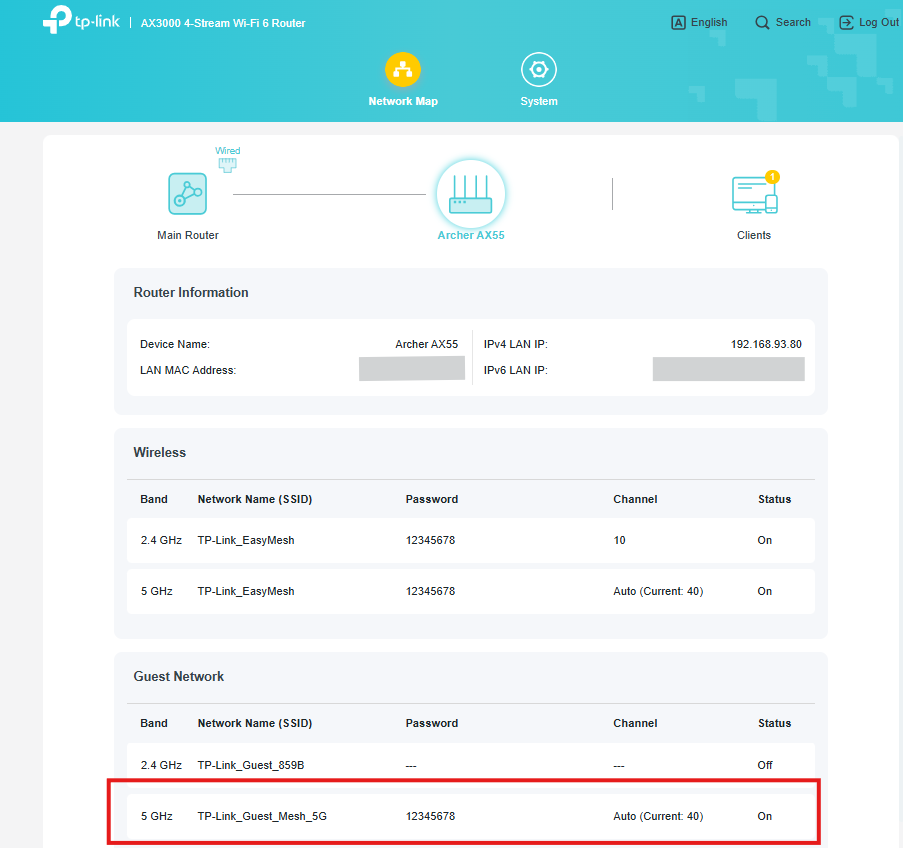
3. Synchronized Advanced Settings Across the Mesh
Critical wireless and security configurations from the main router can now be automatically synchronized to supported satellite units, ensuring consistent policy enforcement and simplified management.
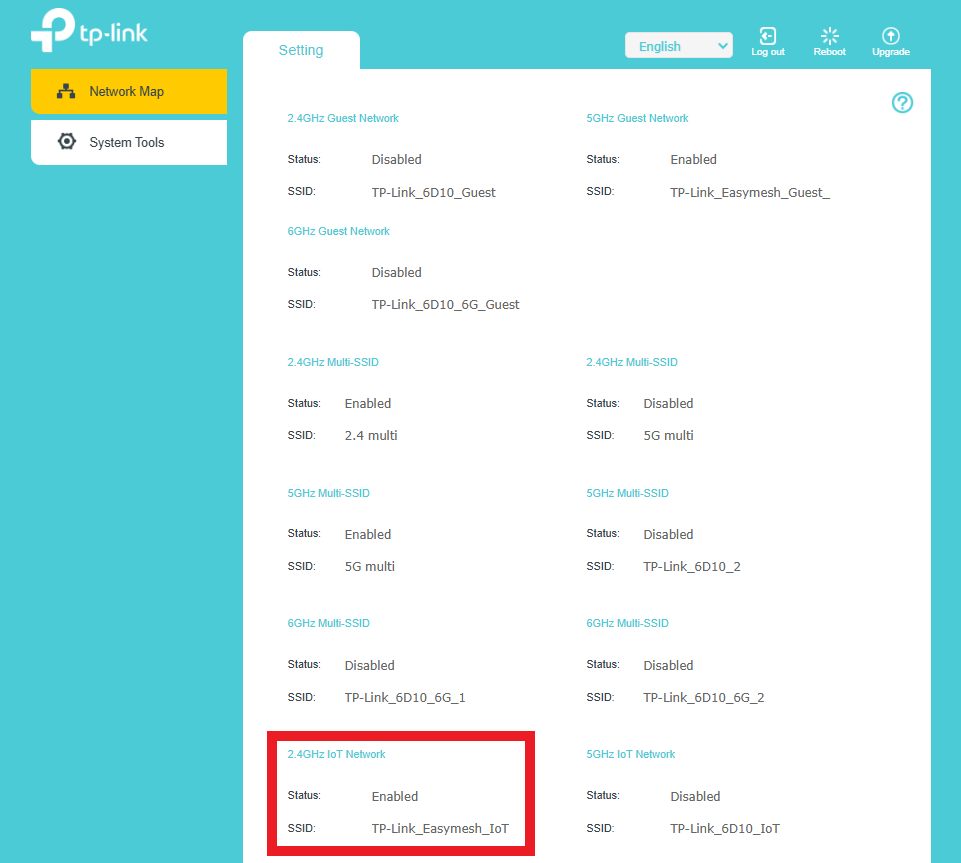
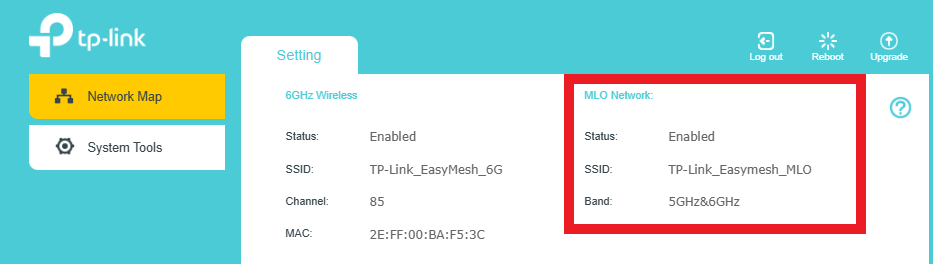
(a) Wireless Network Configuration Sync
- IoT Network settings
- MLO network profiles
(b) Advanced Feature Sync
- ECO Mode
- Hidden SSID configuration
- Reboot Schedule
- Access Control rules
- Device Isolation
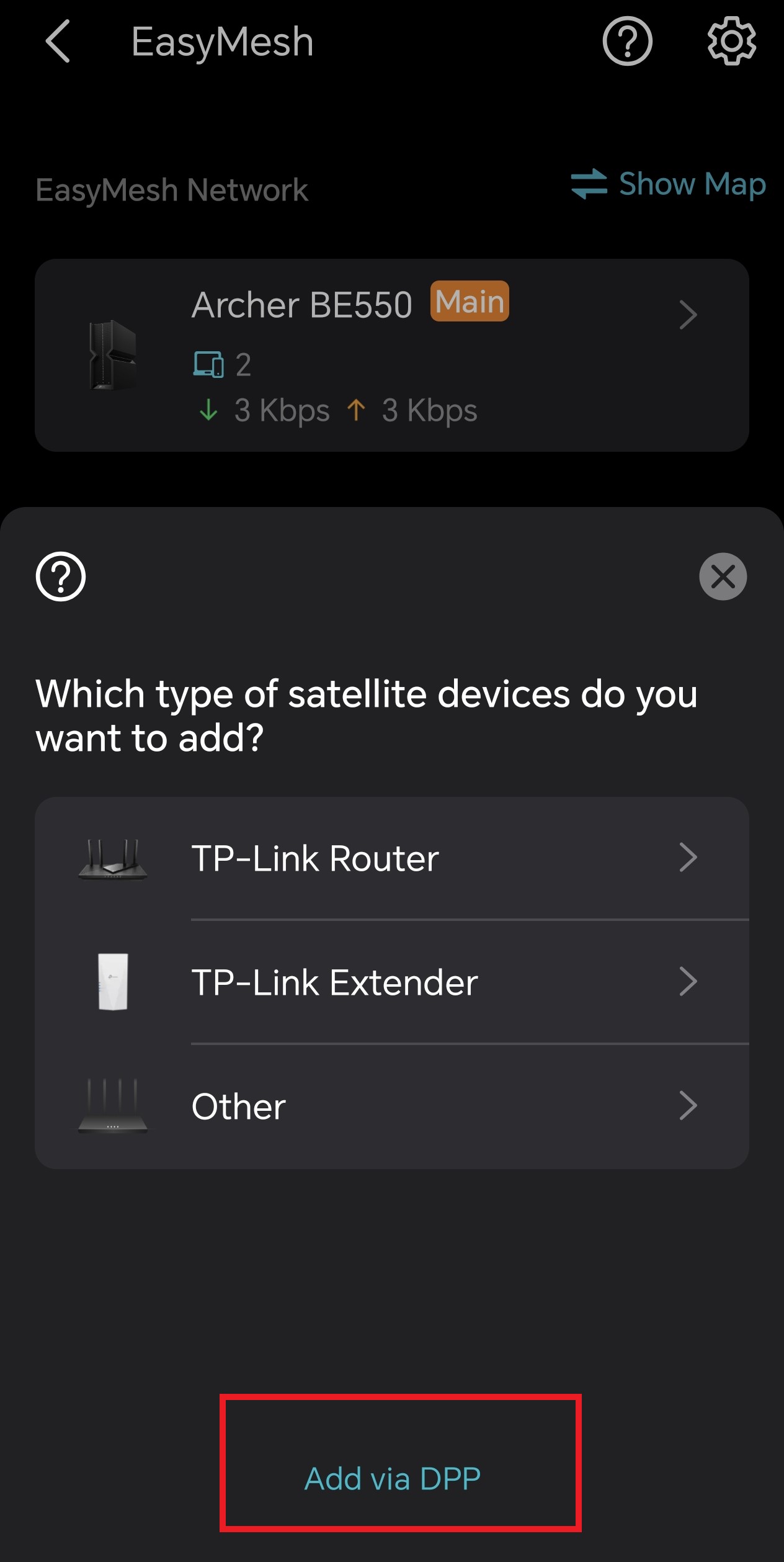
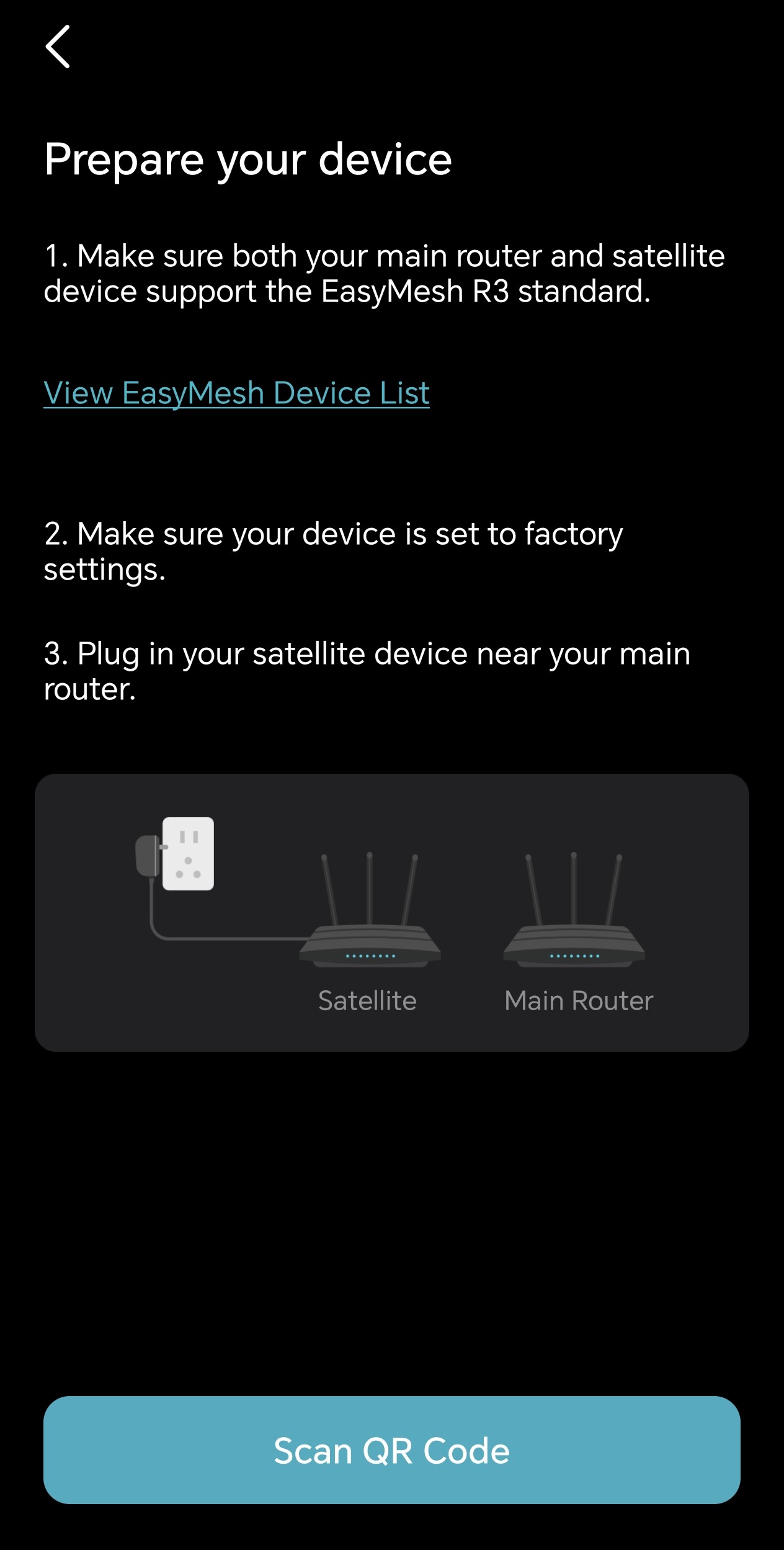
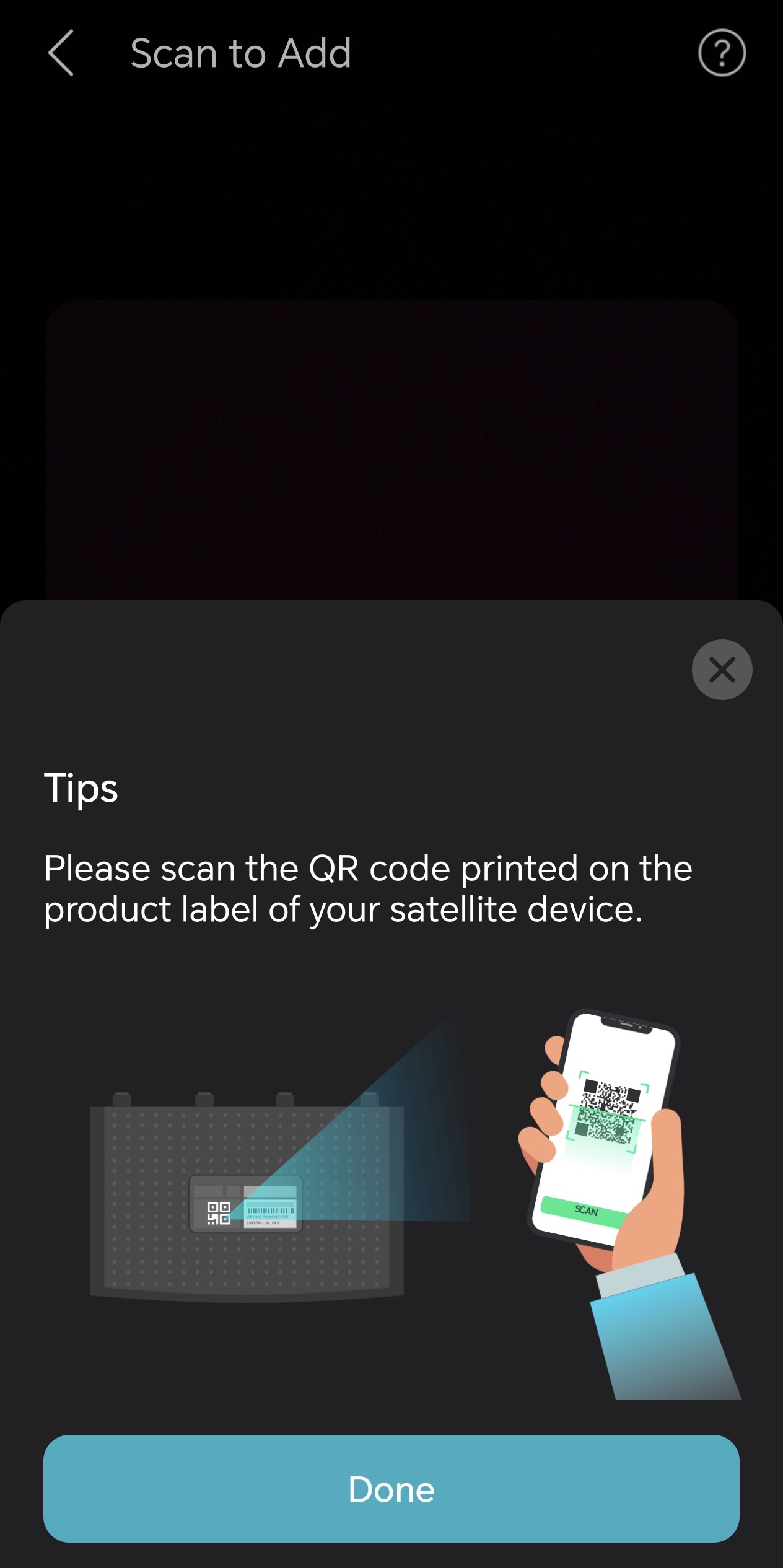
4. EasyMesh DPP (Device Provisioning Protocol) – QR Code Setup
Adding new satellites is now faster and more intuitive via EasyMesh DPP. Within the Tether app, simply scan the QR code on a compatible satellite device to securely and automatically configure it into your mesh network - eliminating manual entry and reducing setup errors.
5. MLO Backhaul
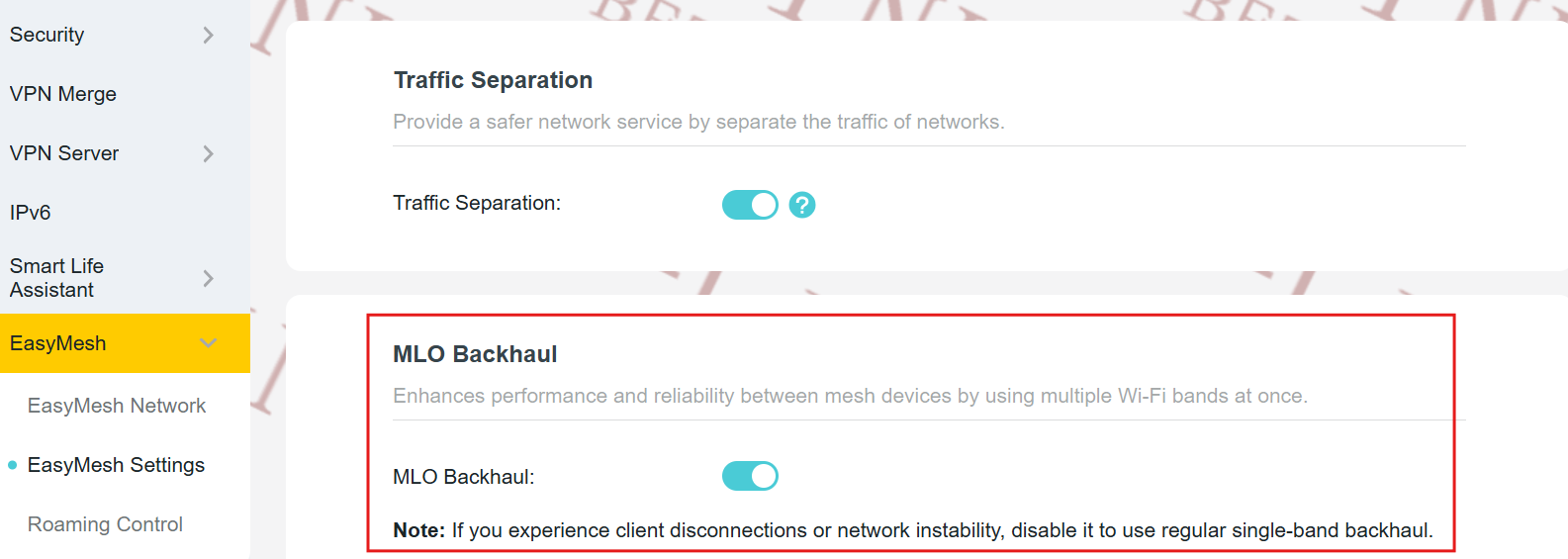
This firmware introduces MLO Backhaul, allowing simultaneous use of multiple frequency bands (e.g., 5 GHz + 6 GHz) for inter-node communication. This significantly boosts backhaul throughput and resilience, especially in high-demand environments.
6. One-Click EasyMesh Network Reset & Reboot
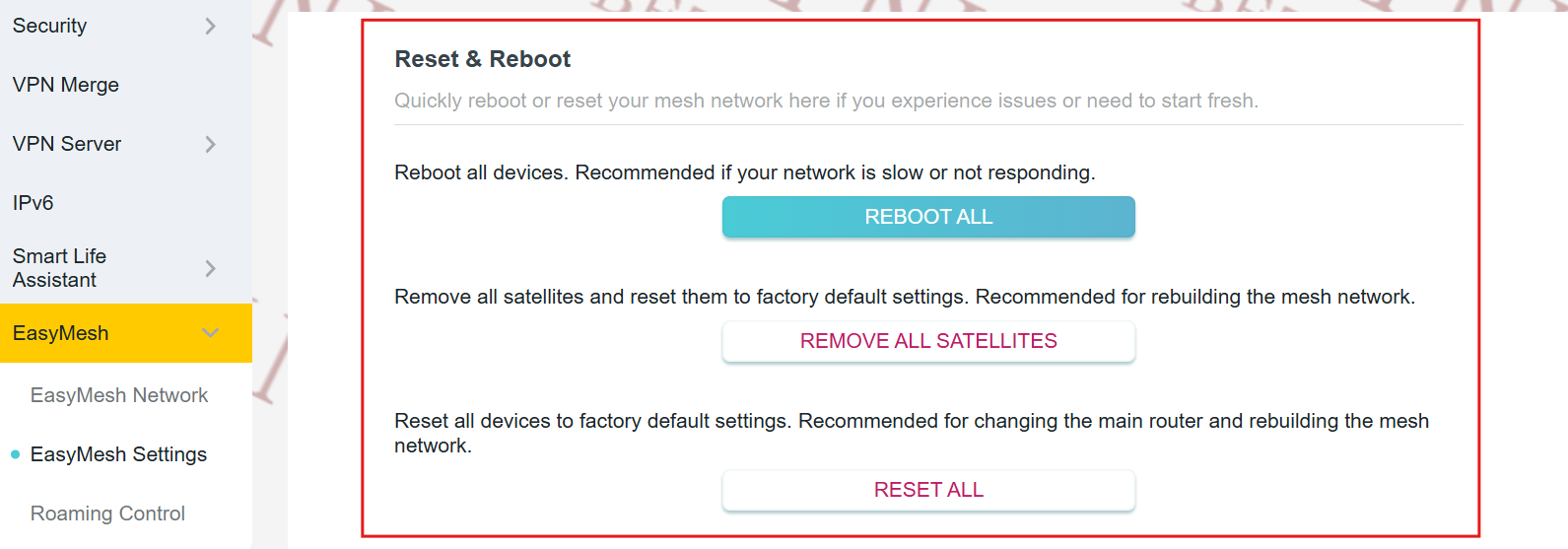
Troubleshoot mesh instability with a single action: the main router now offers “Reset EasyMesh Network” and “Reboot All Nodes” options. These tools provide a quick way to refresh the entire mesh topology without physical access to individual units.
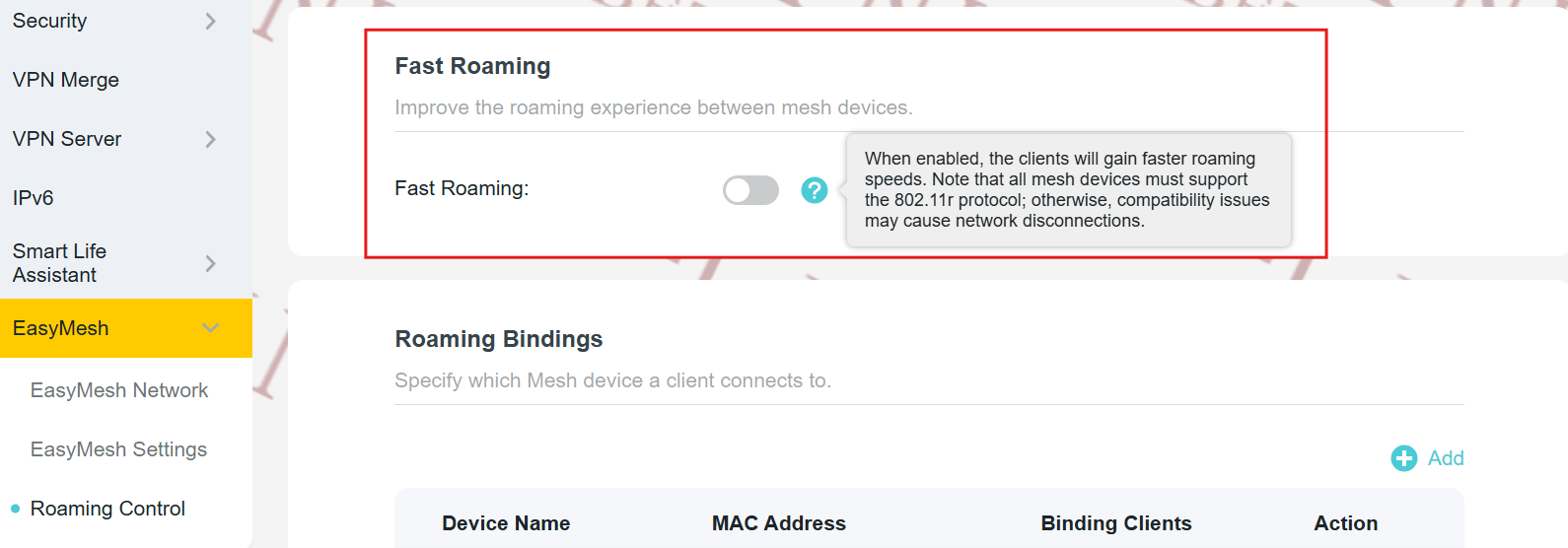
7. Fast Roaming with 802.11r Support
Seamless client roaming is enhanced through native support for the IEEE 802.11r (Fast BSS Transition) protocol across the EasyMesh network. Compatible devices will experience near-instantaneous handoffs between nodes - ideal for real-time applications like VoIP and video streaming.
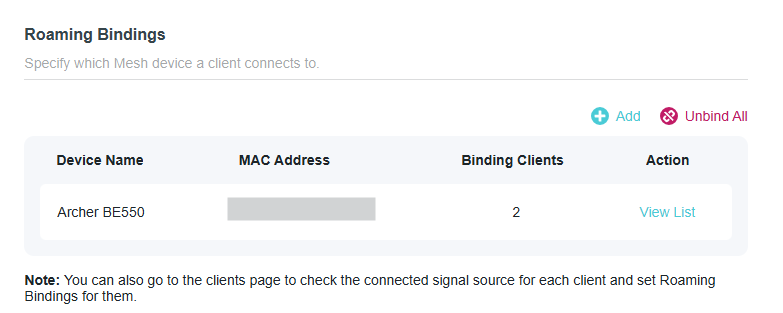
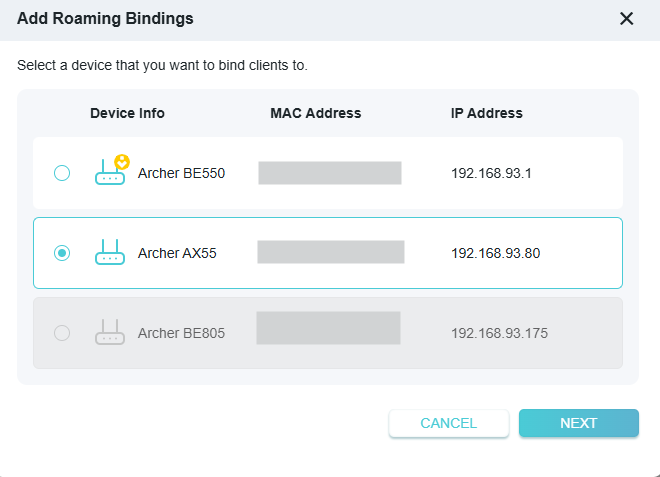
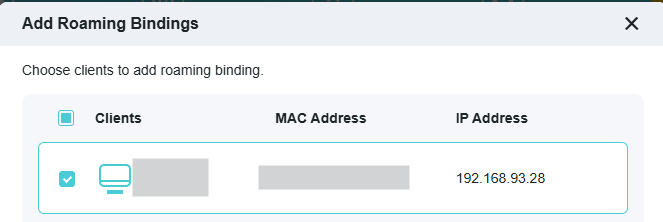
8. Roaming Bindings for Client Affinity
Gain granular control over client mobility with Roaming Bindings. You can now pin specific devices (e.g., smart TVs or IoT sensors) to a designated EasyMesh node, preventing unnecessary roaming and improving connection stability for latency-sensitive or stationary clients.
9. Additional EasyMesh Improvements
- IPTV Support: LAN ports on satellite units now support IPTV traffic pass-through.
- Password Synchronization: The main router’s admin password can be synced to compatible satellites for unified access control.
- UI/UX Refinements: Streamlined interface for all EasyMesh-related functions, improving navigation and readability.
10. Optimized Parental Controls Interface
The parental control dashboard has been visually and functionally refined, offering clearer scheduling options, device grouping, and usage insights - making family-friendly network management more intuitive than ever.
Upgrade today to transform your home network into a smarter, faster, and more secure ecosystem with the power of next-generation EasyMesh.
Firmware Download:
Before the Upgrade
(1) Please be sure you have read the Beta Test Agreement before upgrading the pre-release firmware!
(2) For the sake of insurance, it's always recommended to save a copy of the router's Backup Config file before upgrading or downgrading.
(3) This pre-release firmware for Archer BE550 V2 can be applied to all versions (EU/US/AU/CA/etc).
(4) You may follow the guide to upgrade the firmware of your router. How to Upgrade the Firmware on the TP-Link Wi-Fi Routers.
(5) The screenshots in this article are taken from the web GUI of Archer BE550 V2 for reference only.
(6) This version of software can't be degraded to the previous official version.
Direct Firmware Download Link
| Archer BE550_V2 | Archer BE550_V2_1.3.1 Build 20260303 (Pre-release firmware) |
Additional Information
As always, we value your feedback. If somehow you encounter an issue during or after the router firmware upgrade, please comment below with the following info. Your input helps us continue to improve and provide the best products and support.
- Provide a detailed network layout, including how the devices are connected, especially if there are EasyMesh satellite devices.
- Detailed issue description, and provide more information on the specific conditions that seem to trigger the problem.
Thank you for your continued support and for being part of our community.
Apr 15, 2026
Updated to provide a new version of pre-release firmware, which fixed the reported client list display issue.
- Copy Link
- Subscribe
- Bookmark
- Report Inappropriate Content
Luisfc wrote
Hardware Version: Archer BE550 v2.0
Firmware Version: 1.3.1 Build 20260403 rel.18661(5553)
Hello!
Over the last few days, I have been having trouble connecting new Amazon Echo devices to my 2.4 GHz IoT/Guest network.
The devices connect normally to the 5 GHz IoT network, but since they are located farther away from the router, I need them to use the 2.4 GHz network.
An important detail is that I already had two Echo devices connected to the same 2.4 GHz IoT network, and they were working without any issues.
To troubleshoot the problem, I performed several tests:
Disabled and re-enabled both the Guest and IoT networks.
Disabled Device Isolation.
Rebooted the router and retried the setup.
None of these actions solved the issue.
Eventually, I disabled EasyMesh, and the new Echo devices connected successfully to the 2.4 GHz IoT network. After completing the setup, everything worked as expected.
However, when I enabled EasyMesh again, both newly added Echo devices immediately went offline and stopped working.
At this point, it seems that EasyMesh is somehow interfering with the Amazon Echo devices when they are connected to the 2.4 GHz IoT/Guest network.
Has anyone experienced a similar issue? Is there a known compatibility issue between EasyMesh and Amazon Echo devices on the IoT/Guest 2.4 GHz network after the latest firmware?
Also, is there any way to downgrade to a previous firmware version for testing purposes?
Thank you!
Hello @Luisfc
You are not allowed to downgrade to the previous 1.2.x version directly. While you should be able to install the provided pre-release version (1.3.1 Build 20260303) in my original post in this thread:
https://community.tp-link.com/en/home/forum/topic/853652

For the unexpected behavior you experienced with the new official 1.3.1 Build 20260403 version, could you please help provide more details as follows?
1. Do you have EasyMesh satellite devices, such as EasyMesh routers or extenders, that connect to the main BE550 V2? What is the detailed network topology?
2. When EasyMesh is enabled on the main BE550, are the Amazon Echo devices able to connect to the main 2.4G network? If not, are there any errors? BTW, which specific models are these Echo devices?
3. When disabling EasyMesh on the main BE550, are the Echo devices connecting to the IoT Network immediately without needing to do any other modifications or changes?
4. From which version did you upgrade to the new official 1.3.1 Build 20260403 version? Have you tried resetting the router to factory defaults and reconfiguring it from scratch? (You said you have rebooted the router and retried the setup, I just want to be sure that you mean its factory defaults.)
- Copy Link
- Report Inappropriate Content
Mick_D wrote
i see unstability mentioned when using BE550 1.3.1 build 20260303. Then a comment "but with the official version the problem has gone.
is their a non beta release(official) with the mesh enhancements? Or is the latest still the pre-release (1.3.1 build 20260303)?
That's right. 1.3.1 build 20260303 is still the latest pre-release version at this moment.
- Copy Link
- Report Inappropriate Content
@Kevin_Z are their any chance tplink will update smart connect to include 6ghz so none wifi 7 devices can smoothly transition between 3 bands?
- Copy Link
- Report Inappropriate Content

Thank you for your response.
Regarding your questions:
1. Do you have EasyMesh satellite devices, such as EasyMesh routers or extenders, that connect to the main BE550 V2? What is the detailed network topology?
A: Yes, I have a TP-Link RE605X v3.0 configured as an EasyMesh satellite. It is connected directly to the main Archer BE550 V2 router.
2. When EasyMesh is enabled on the main BE550, are the Amazon Echo devices able to connect to the main 2.4G network? If not, are there any errors? BTW, which specific models are these Echo devices?
A: The issue occurs when the devices try to connect to the 2.4 GHz IoT/Guest network. The affected devices are two Amazon Echo Spot units (2024 model). They were purchased last week, and I attempted to set them up over the weekend.
3. When disabling EasyMesh on the main BE550, are the Echo devices connecting to the IoT Network immediately without needing to do any other modifications or changes?
A: Yes, they are able to reconnect and work normally after rebooting the Echo devices.
4. From which version did you upgrade to the new official 1.3.1 Build 20260403 version? Have you tried resetting the router to factory defaults and reconfiguring it from scratch? (You said you have rebooted the router and retried the setup, I just want to be sure that you mean its factory defaults.)
A: I updated the firmware using the Tether app.
I have just performed a factory reset and have some additional observations:
- I disabled Smart Connect and enabled EasyMesh, with no satellite devices connected.
- I configured the main wireless networks (2.4 GHz, 5 GHz, and 6 GHz), as well as the 2.4 GHz IoT and Guest networks.
- Under these conditions, both Echo Spot devices were able to connect successfully to the 2.4 GHz networks.
- I then enabled Smart Connect, and both Echo Spot devices stopped working.
- After disabling Smart Connect, the Echo devices started working again.
- Next, I added the RE605X to the EasyMesh network, and the Echo devices continued to work normally.
- I enabled Smart Connect once more, and both Echo Spot devices stopped working again.
- After disabling Smart Connect, the Echo devices immediately started working again. No reboot required.
Based on these tests, it appears that the issue may be related to the combination of Smart Connect and EasyMesh rather than EasyMesh alone.
Please feel free to reach out if you need any additional information or if there are other tests you would like me to perform.
- Copy Link
- Report Inappropriate Content
Thank you very much for your detailed testing.
Luisfc wrote
2. When EasyMesh is enabled on the main BE550, are the Amazon Echo devices able to connect to the main 2.4G network? If not, are there any errors? BTW, which specific models are these Echo devices?
A: The issue occurs when the devices try to connect to the 2.4 GHz IoT/Guest network. The affected devices are two Amazon Echo Spot units (2024 model). They were purchased last week, and I attempted to set them up over the weekend.
I was trying to confirm whether these two Echo Spot units (2024 model) can connect to the main 2.4 GHz network but not to the 2.4 GHz IoT/Guest network when both Smart Connect and EasyMesh are enabled on the BE550 v2. Are you able to confirm this?
One more question: is the RE605X v3.0 connected to the main BE550 v2 via wireless or an Ethernet cable?
- Copy Link
- Report Inappropriate Content
Zypherus wrote
@Kevin_Z are their any chance tplink will update smart connect to include 6ghz so none wifi 7 devices can smoothly transition between 3 bands?
To my knowledge, this may not be achievable.
As I explained to rm1091 in this reply that 6G operates on entirely different wireless standards, uses stricter WPA3 security, and requires device support for the newer 6E/7 generations. If requiring Smart Connect to include 6G, that means it should support WPA3 security; as a result, devices that don't support WPA3 security won't be able to connect to the Wi-Fi any longer.
- Copy Link
- Report Inappropriate Content
Information
Helpful: 5
Views: 23979
Replies: 136
Voters 4